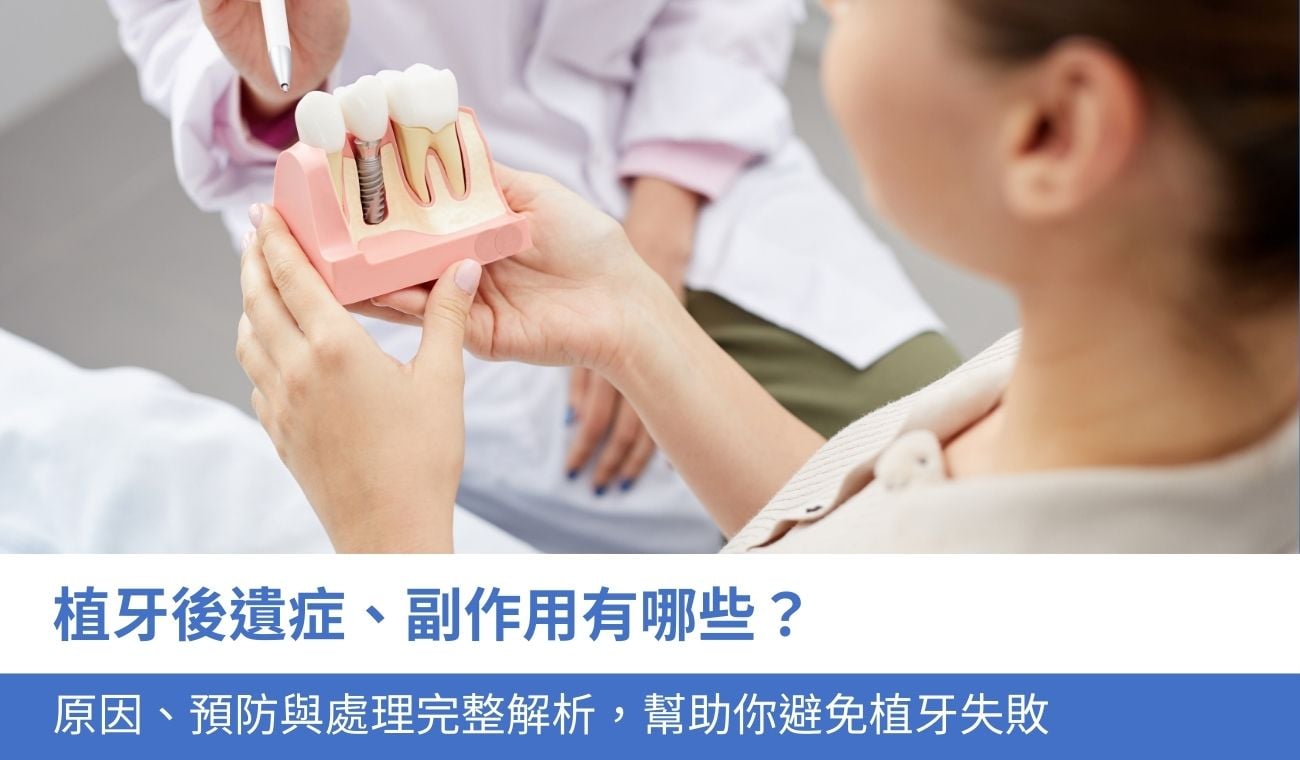
When a problem arises after an implant, first look at when it appears: if the implant fails to bond with the bone during osseointegration (usually within 3 to 6 months of placement), it is an early failure; if the surrounding gum and bone are damaged by bacteria several years after the crown is fitted, it is peri-implantitis. The two have different causes and are treated differently.
Key Points
- Implant complications can be divided into 4 types by when they appear
- A loose crown or screw does not mean the implant has failed
- Early failure is mostly related to infection or loading too early
- An implant that fails early generally needs to be removed, with re-implantation assessed after healing
- Early peri-implantitis is often mistaken for 'heatiness'
- Treatment of peri-implantitis depends on the degree of bone loss
What Types of Implant Complications Are There? 4 Types by When They Appear
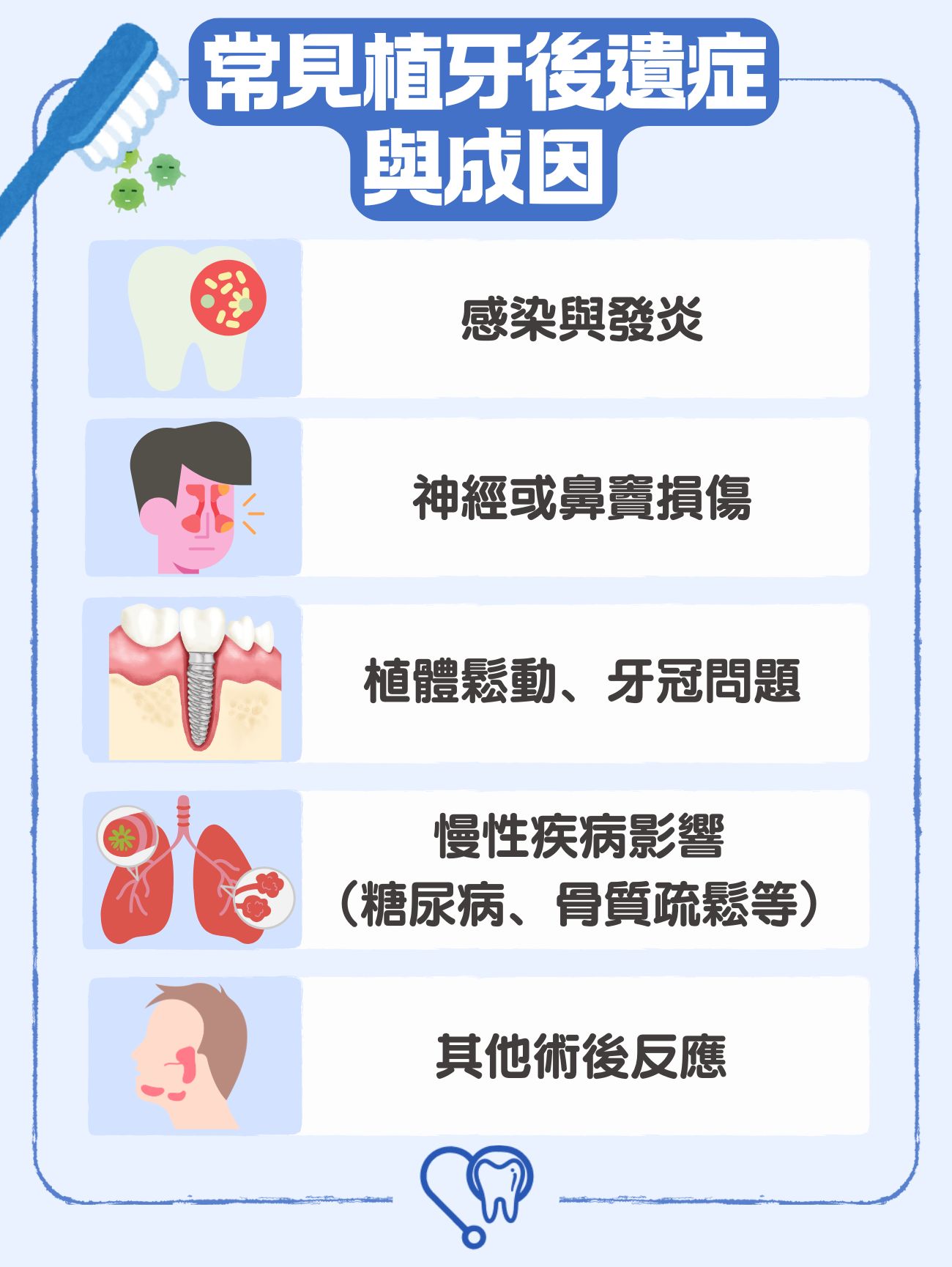
Implant complications (side effects) can broadly be divided into 4 types according to when they appear:
- Short-term post-operative reactions: the first few days after surgery
- Early failure: during osseointegration, after the implant is placed and before the crown is fitted
- Peri-implant mucositis and peri-implantitis: after the crown is fitted, usually appearing after several years of use
- Crown and component problems: at any time after the crown is fitted
Mild swelling and pain and saliva with a little blood in the first few days after surgery are common reactions. When the surgical site is close to the mandibular nerve or the maxillary sinus, the distance is assessed with a 3D cone beam CT (CBCT) scan before surgery; persistent numbness of the chin, lip or tongue after surgery is one of the signs that a follow-up visit is needed. For other post-operative reactions that need a follow-up visit and post-operative eating and cleaning, see do dental implants hurt.
If an implant feels loose or wobbly, first find out whether the problem is with the crown and components or the implant itself has failed to bond with the bone, as the two are treated very differently.
Is a Loose Crown or Screw an Implant Failure? Telling Component Problems from Implant Problems
A loose crown or abutment screw, or a chipped crown, does not mean the implant has failed. It is a problem with the components and crown; the implant itself is still bonded with the bone.
These problems are often related to grinding teeth at night or clenching: the sideways forces of night-time grinding are greater and can loosen screws and chip crowns, and in severe cases even fracture the implant.
Whether it is only the crown that is loose or the implant is wobbling together with the crown can only be told by a dental examination and X-rays. Component problems can generally be fixed by tightening or replacing the screw, or repairing or remaking the crown. People who grind their teeth at night can discuss wearing a night guard with their dentist to reduce the sideways forces on the implant.
Early Implant Failure: The Implant Fails to Bond with the Bone During Osseointegration
Early implant failure means the bone does not bond securely with the implant during osseointegration, after the implant is placed and before the crown is fitted (usually within 3 to 6 months). The abutment and crown are only fitted after osseointegration is complete. For the 4 stages of the whole implant process and how long each takes, see Dental Implants Explained.
Common causes of early implant failure
- Infection at the surgical site: bacteria multiply around the implant and prevent bone from growing around it
- Soft bone: the implant is not stable enough when placed (insufficient primary stability), making it difficult for bone to bond to the implant surface
- Loading too early: the implant bears biting forces before osseointegration is complete, causing micro-movement in the bone
Poor blood sugar control and smoking also affect osseointegration. For how far these need to be managed before an implant, see Pre-implant Requirements.
What are the signs of early implant failure?
If the implant wobbles during osseointegration, or there is persistent pain or swelling at the implant site, these may be signs that the implant has not bonded with the bone, and you should arrange a follow-up visit as soon as possible.
The dentist will confirm this with an X-ray: a dark ring of shadow around the implant shows there is no bone surrounding it there, meaning the implant has not bonded with the bone.
How is early implant failure treated?
An implant that fails early generally needs to be removed, and once the site has healed, re-implantation is assessed; a new implant is not placed at the same site straight away. Treatment broadly involves 4 steps:
- Remove the implant and clean the wound: under local anaesthesia, the implant that has not bonded with the bone is removed, and infected tissue around it is cleaned out.
- Identify and address the cause of failure: for example, controlling infection, improving blood sugar control, stopping smoking or adjusting biting forces during osseointegration, so the same problem does not happen again when a new implant is placed.
- Wait for the site to heal: the waiting time depends on the degree of infection and the extent of bone loss; if bone volume is insufficient, bone grafting is done first and new bone allowed to form.
- Assess re-implantation: after healing, bone volume is assessed again with X-rays or CBCT to decide when to place a new implant.
What Is Peri-implantitis? The Difference Between Peri-implant Mucositis and Peri-implantitis
Inflammation around an implant has two stages: when the inflammation is limited to the gum and no bone has been lost, it is peri-implant mucositis; when the inflammation has caused bone loss around the implant, it is peri-implantitis. In the early stage there are usually only red, swollen and bleeding gums, and many patients think it is 'heatiness' and do not get it treated.
| Stage | Common signs |
| Peri-implant mucositis | Red, swollen gums around the implant, bleeding when brushing, bad breath |
| Peri-implantitis | Pus from the gums, gum recession exposing the neck of the implant, weak bite, and in severe cases a wobbling implant |
Peri-implantitis usually appears several years after the crown is fitted. It is caused by plaque building up around the implant, with bacteria eroding the gum and bone. Poor cleaning, not having regular professional cleaning, excessive biting forces from grinding teeth at night, and smoking all increase the chance of inflammation.
How Is Peri-implantitis Treated? It Depends on the Degree of Bone Loss
Treatment of peri-implantitis mainly depends on how much bone around the implant has been lost by the time it is found:
- Only slight bone loss: for example, the gum around the implant often bleeds when brushing and X-rays show a small amount of bone loss. The implant surface is generally cleaned with ultrasonic instruments or similar methods, together with local medication and cleaning instructions.
- Extensive bone loss: clinically, when patients have not had follow-up visits for a long time and only seek treatment once the implant wobbles or the gum produces pus, much of the bone around the implant has usually been lost and the implant has lost its support. The implant generally needs to be removed, followed by an assessment for bone grafting and reconstruction.
At the peri-implant mucositis stage no bone has been lost yet, and with better cleaning and professional cleaning the inflammation can generally be controlled. Once bone has been lost, the aim of cleaning the implant surface is to stabilise the existing bone, not to make the bone grow back to its original state.
FAQ
After a failed implant is removed, what can be done about the missing tooth while waiting?
While waiting for the site to heal, if the missing tooth affects your appearance or chewing, you can discuss with your dentist whether a temporary denture is needed; whether and when it can be worn depends on how the wound is healing. During the wait, keep the site clean as instructed by your dentist to reduce the chance of another infection.
How long do dental implants last?
How long an implant lasts ranges from several years to several decades and varies from person to person; it depends on cleaning, bite habits and general health. For how cleaning implants differs from natural teeth, areas easily missed and recommended follow-up intervals, see how long can a dental implant last.
Summary
Regular check-ups with cleaning and X-rays after the crown is fitted help detect peri-implant mucositis before bone is lost. If you are considering implants or already have them, ask your dentist which type of complication you most need to watch out for and what will be checked at follow-up visits.
Article last updated: 2026-11
Disclaimer
This article is for information only and does not contain any invitation or solicitation. Patients should seek a professional dentist for diagnosis and treatment according to their own circumstances. To find out more or book a service, we recommend contacting the relevant clinic directly. Please choose suitable dental services and clinics carefully yourself.