
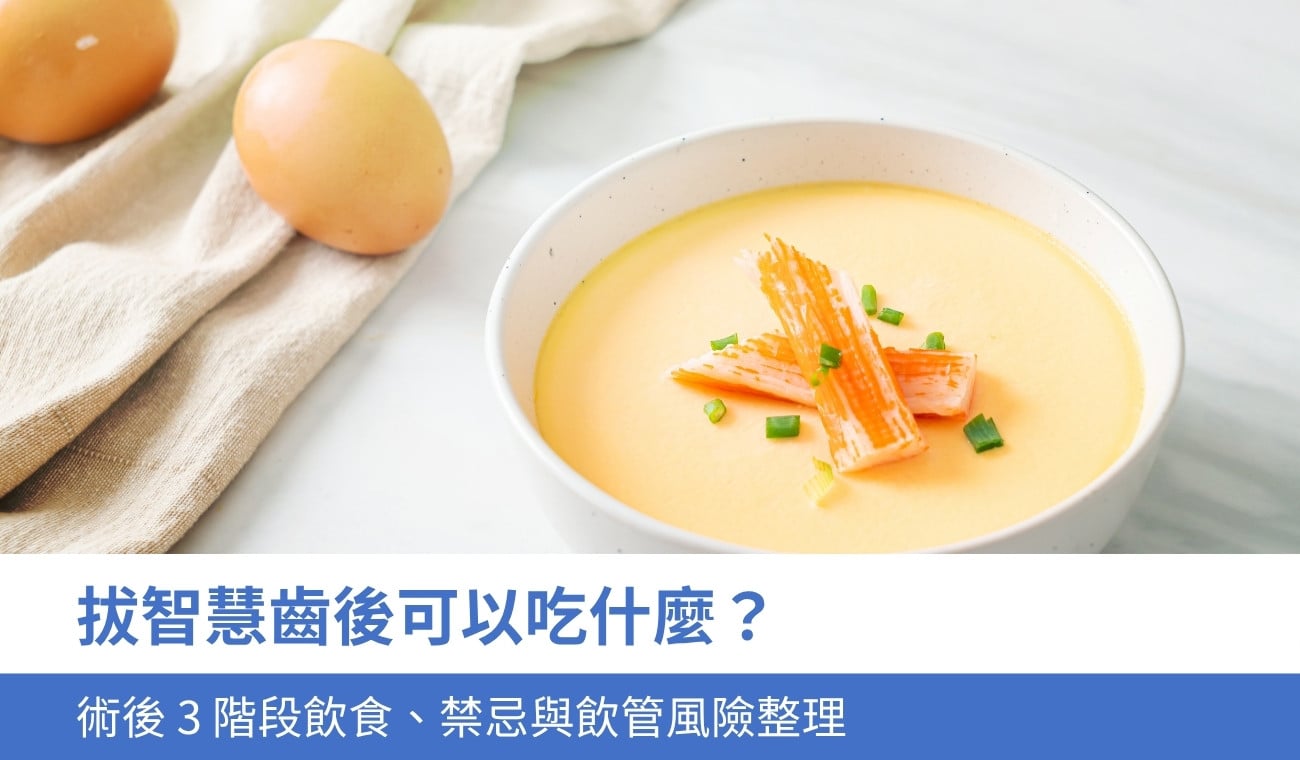
The key to eating after wisdom tooth extraction is not to dislodge the blood clot: for the first few days, eat warm or cool, soft food and avoid irritating foods, and return to a normal diet about a week later depending on your recovery.
Key points of this article
- Do not eat until the anaesthetic has worn off; on the day, have warm or cool liquids and soft food
- For the first 3 days, chew on the side that was not operated on, and avoid hard, hot and spicy food
- For the first week, drink from a cup and do not use a straw, so as not to pull out the blood clot
- From 24 hours after surgery, you can gently brush the other teeth, avoiding the wound
What you eat after wisdom tooth extraction directly affects whether the wound heals smoothly. Below is a stage-by-stage guide, by time after surgery, to what you can eat and what to avoid, along with two points that general patient leaflets rarely mention but that are common in clinical practice.
How long after wisdom tooth extraction can you eat normally?
After wisdom tooth extraction, you should wait until the anaesthetic has completely worn off before eating, usually about 2 to 4 hours after surgery, depending on the type of anaesthesia and the individual's metabolism.
While the anaesthetic is still in effect, the lips, tongue and cheeks have no feeling, so it is easy to bite yourself when eating, and you cannot tell whether the food is too hot. Once feeling returns, for the first meal you can choose foods that melt in the mouth, such as cool congee, yoghurt or steamed egg, and avoid hot food, which can widen the blood vessels in the wound and increase the chance of oozing.
To learn more about overall recovery and arrangements for time off work, seeRecovery time after wisdom tooth extractionfor an explanation.
Diet in stages after wisdom tooth extraction: from the day of surgery to about a week
Eating after wisdom tooth extraction falls broadly into three stages: on the day of surgery, mainly warm or cool liquids and soft food; on days 2 to 3, mainly soft foods; and from about a week later, gradually returning to a normal diet depending on how the wound is healing.
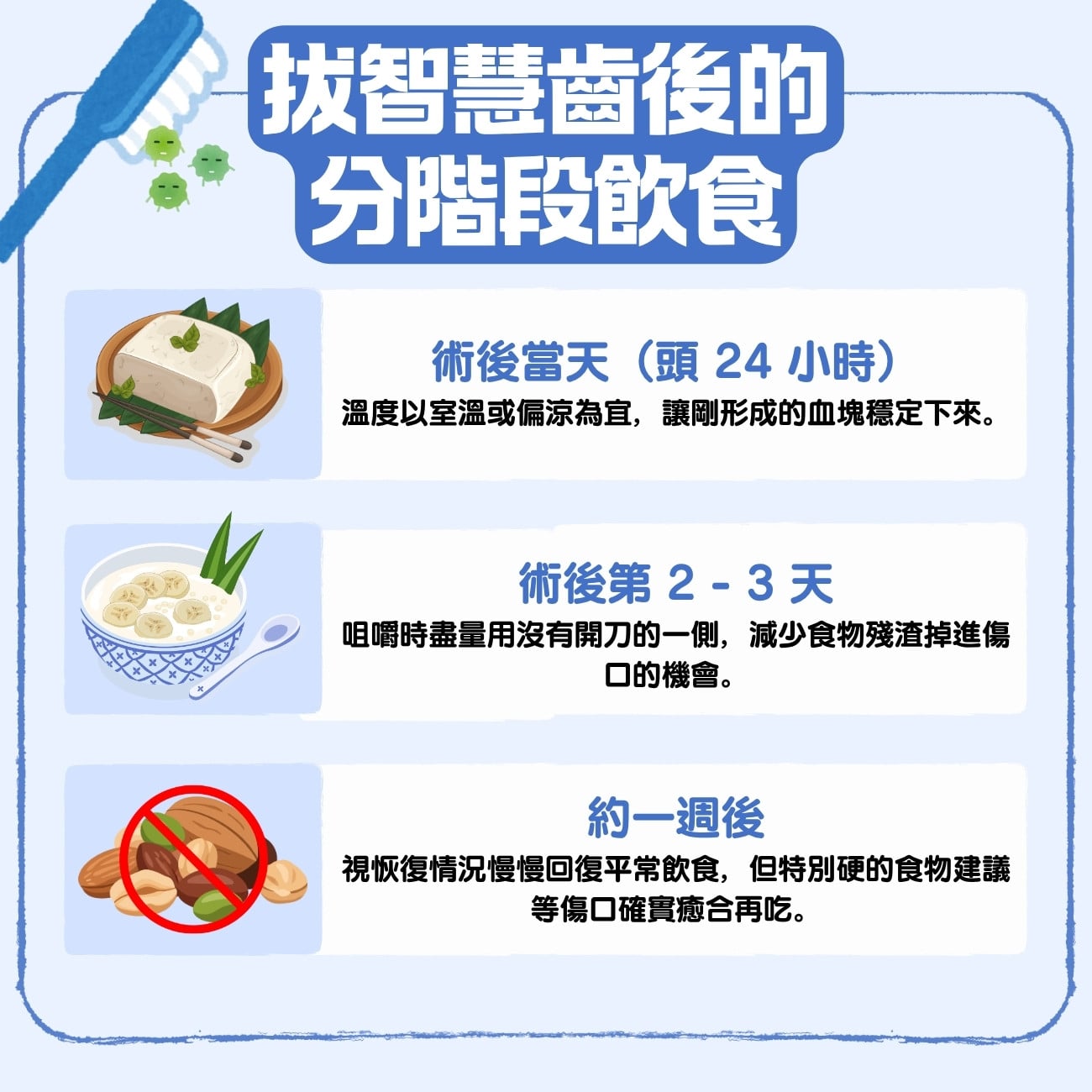
Day of surgery (first 24 hours)
Foods that melt in the mouth, such as cool congee, tofu, yoghurt, pudding and steamed egg, are all suitable. Room temperature or slightly cool is best, to let the newly formed blood clot stabilise.
Days 2 – 3 after surgery
Swelling is usually most noticeable during these days. You can eat thick congee, mashed potato, bananas, and fish or noodles cooked until soft. When chewing, use the side that was not operated on as far as possible to reduce the chance of food debris getting into the wound.
About a week later
By this time most people's wounds are gradually stabilising, and you can slowly return to your usual diet depending on recovery. However, particularly hard foods are best left until the wound has truly healed (see the next section). Recovery progress varies from person to person, and there is no need to force a return to a normal diet.
Foods and eating behaviours to avoid after wisdom tooth extraction
In the first few days after wisdom tooth extraction, avoid food that is too hard, hot, spicy or sticky or that has fine, small particles, and avoid alcohol, smoking and using a straw, as all of these may irritate the wound or dislodge the blood clot.
Food that is too hard (for example nuts or crunchy bones) may knock against the wound or loosen stitches; food that is too hot affects the stability of the blood clot; food that is too spicy or sour irritates the wound; and food with fine, small particles (for example popcorn or melon seeds) easily gets into the tooth socket and is hard to remove.
As for behaviour, alcohol affects blood clotting and healing, and may also interact with painkillers or anti-inflammatory medication; the nicotine in cigarettes constricts blood vessels and delays recovery. The reason for avoiding straws is less intuitive and is explained separately in the next section.
Details most people overlook after wisdom tooth extraction: straws and brushing
In the first week after wisdom tooth extraction, it is not advisable to use a straw, nor to stop brushing altogether for fear of touching the wound; the former easily dislodges the blood clot and can lead to dry socket, while the latter lets food debris build up and raises the risk of infection.
Few people mention these two points specifically, but they come up often in clinical practice. The key with a straw is the force: sucking creates negative pressure in the mouth and pulls outwards the blood clot that should stay in the socket to protect the wound. This is precisely what causes
The mistake with cleaning comes from worrying about hurting the wound, so the whole area is left untouched for several days, which instead lets debris and bacteria build up. The correct approach is, from 24 hours after surgery, to avoid the wound itself and gently brush the other teeth, and to gently hold the mouthwash provided by the dentist in the mouth near the wound, keeping it clean without putting force on it.
FAQ
How long after wisdom tooth extraction can you have coffee or cold drinks?
It is advisable to avoid coffee within 24 hours after wisdom tooth extraction, as coffee is a hot drink and contains caffeine, which may affect the stability of the blood clot and your rest. Cold drinks are low in temperature, but sipping them from a cup is mostly fine. After that, you can gradually return to them depending on the condition of the wound.
Can you eat spicy food or drink alcohol after wisdom tooth extraction?
It is not advisable to eat spicy food or drink alcohol in the first few days after wisdom tooth extraction. Spicy food irritates the wound, and alcohol affects blood clotting and wound healing, and may also interact with painkillers or anti-inflammatory medication you are taking. It is generally recommended to wait until the wound has initially healed and you have stopped the medication before resuming.
If I keep chewing on the other side after wisdom tooth extraction, will the other side have problems?
Chewing on the side that was not operated on in the short term is normal and recommended, and you can usually resume using both sides once the wound has stabilised after one to two weeks. Short-term chewing on one side will not cause long-term problems. If after more than two weeks you still do not dare to use the operated side, or it hurts as soon as you bite, it is advisable to return for a check of how the wound is healing.
What happens if I accidentally use a straw after wisdom tooth extraction?
Using a straw just once may not cause a problem, but if pain suddenly gets worse a few days later, watch for the possibility of dry socket and return for a follow-up. After you notice you have used a straw, you should avoid any sucking action even more carefully over the next few days, to give the blood clot a chance to stabilise.
Summary
There are no complicated rules for eating after wisdom tooth extraction. The core is to give the blood clot and wound enough time to stabilise: for the first few days, eat warm or cool, soft food, chew on the other side, avoid hard, hot and spicy food and straws, and then slowly return to your usual diet at your own recovery pace. If the wound keeps hurting or oozing blood when you eat, returning for a check is safer than forcing yourself to eat. For more complete information on wisdom tooth management, seeComplete guide to wisdom tooth extraction.
Disclaimer
This article is for information only and does not contain any invitation or solicitation. Patients should seek a professional dentist for diagnosis and treatment according to their own circumstances. To find out more or book a service, we recommend contacting the relevant clinic directly. Please choose suitable dental services and clinics carefully yourself.



