
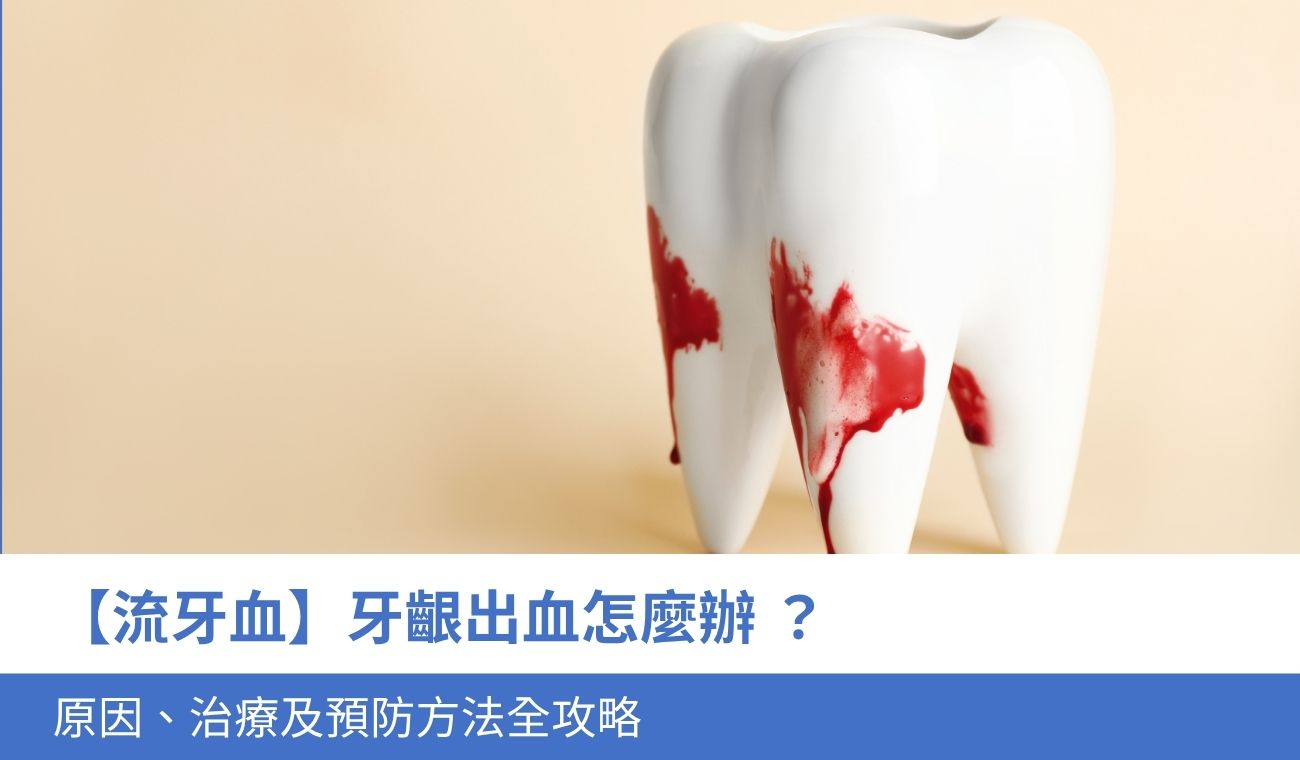
Bleeding gums are mostly caused by gum inflammation (such as gingivitis or periodontal disease), and may also be related to systemic conditions or medication. With correct cleaning methods, regular scaling and dental check-ups, most cases can be reversed.
What counts as "bleeding gums"?
Some people think only bleeding when brushing counts as bleeding gums, but this is not necessarily so. Whenever the gums bleed under any circumstances, it means the gum tissue is inflamed or damaged.
Common situations include bleeding when brushing, when biting while eating, or even bleeding spontaneously without being touched. These are all the result of tiny blood vessels in the gums rupturing, and are mostly related to plaque build-up or inflammation of the periodontal tissue.
Normal vs abnormal gum bleeding
If there is only occasional slight bleeding because the bristles are too hard or the toothbrush is too new, it is usually a short-lived "physical irritation" and not a big problem.
But if it happens every day, or even bleeds when using floss or biting something, it is "abnormal bleeding". This usually means the gums are already inflamed, which is a warning sign of early or intermediate-stage periodontal disease. If it is delayed further, the inflammation will spread to the alveolar bone, causing teeth to loosen or fall out.
5 main causes of bleeding gums
Although most people brush every day, the teeth are not necessarily brushed thoroughly. When food debris builds up on the teeth, bacteria may release toxins that damage the periodontal tissue and cause bleeding gums.
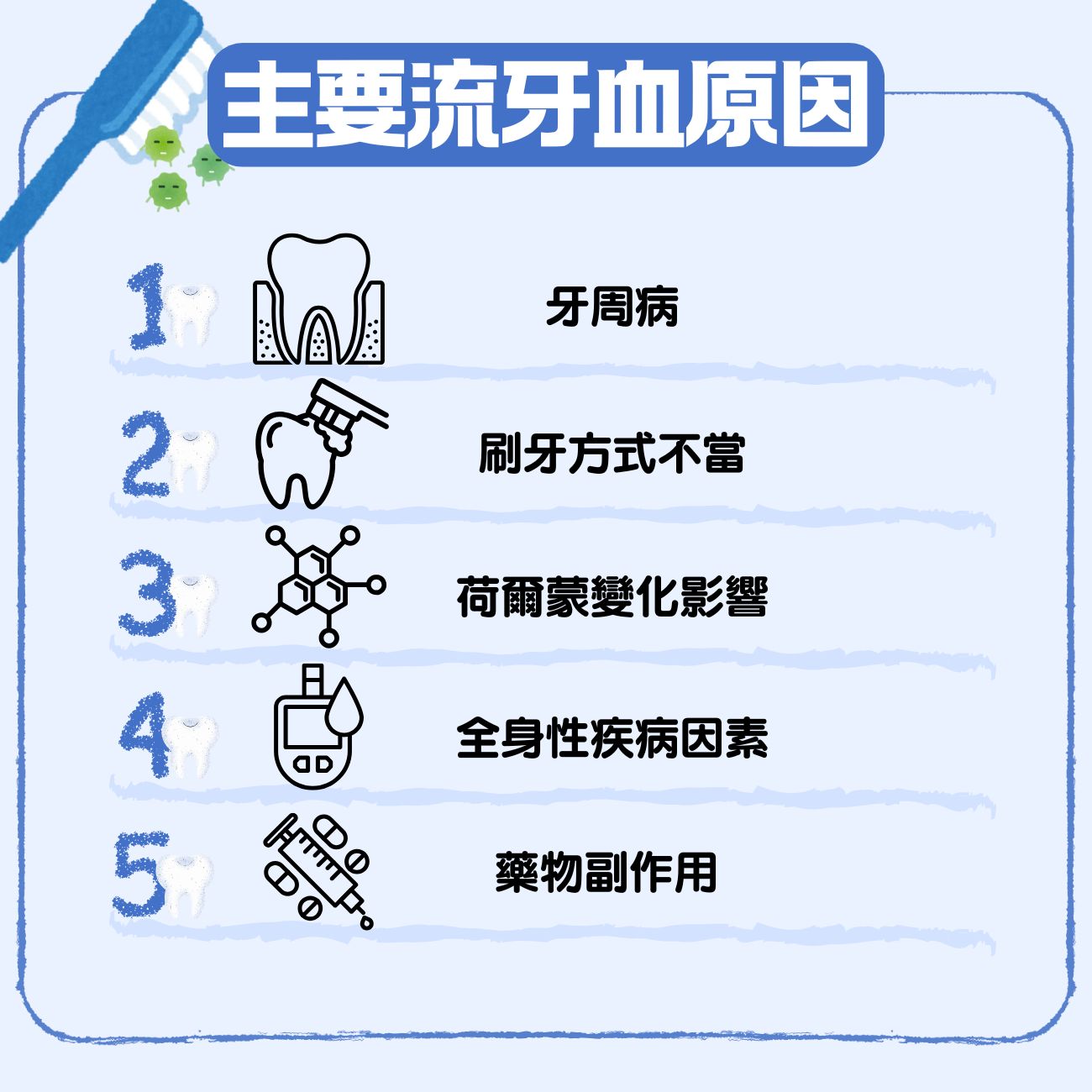
Periodontal disease (gingivitis and periodontitis)
This is the most common cause of bleeding gums. If bacteria around the teeth accumulate for a long time without being removed, they turn into tartar, which irritates the gums and causes inflammation, and if it keeps getting worse it will develop into "periodontitis".
Improper brushing technique
Some people think brushing hard gets the teeth cleaner, but brushing too hard actually injures the gums. Using a hard-bristle toothbrush or brushing sideways with a scrubbing motion easily causes gum bleeding and gum recession.
Hormonal changes
During pregnancy, menstruation or menopause, hormonal changes in a woman's body make the gum tissue more sensitive and prone to bleeding, such as "pregnancy gingivitis", which is especially common in pregnant women.
Systemic disease factors
Some diseases also increase the risk of gum bleeding. For example, in people with diabetes and blood disorders (such as leukaemia or platelet abnormalities), the gums bleed easily when irritated.
medication side effects
Some medications affect blood clotting, such as anticoagulants, blood pressure medication and oral contraceptives.
Further reading: learn more aboutthe causes of bleeding gumsto help you better prevent
bleeding gumsSymptoms and how to judge severity
How much the gums bleed reflects the health of the gums, and learning to observe it helps you spot problems early.
Features of mild bleeding
If you only occasionally see traces of blood when brushing or flossing, with no pain or swelling, it is mostly early gingivitis. In this case, improving your brushing habits, flossing regularly and having regular scaling can bring improvement within a week or two.
What different accompanying symptoms mean
If the bleeding comes with red, swollen or painful gums, bad breath or a feeling that the teeth look longer, it means the periodontal tissue is receding.
If there are also loose teeth or widening gaps between the teeth, it means periodontitis has progressed to the intermediate or advanced stage. At this point home cleaning alone can no longer restore health, and professional treatment by a dentist is needed.
Warning signs to see a dentist early
If you notice gum bleeding that lasts for more than a week, traces of blood when you wake up, or gums that hurt to touch, see a dentist as soon as possible.
In particular, frequent bleeding, swelling or pus indicates that the inflammation may have reached deep into the tooth root, and delaying treatment can cause teeth to loosen or even fall out.
bleeding gumsTreatment options
Different levels of severity of bleeding gums need different treatments. Mild bleeding can be restored to health through daily oral care, while moderate to severe inflammation may need professional intervention.
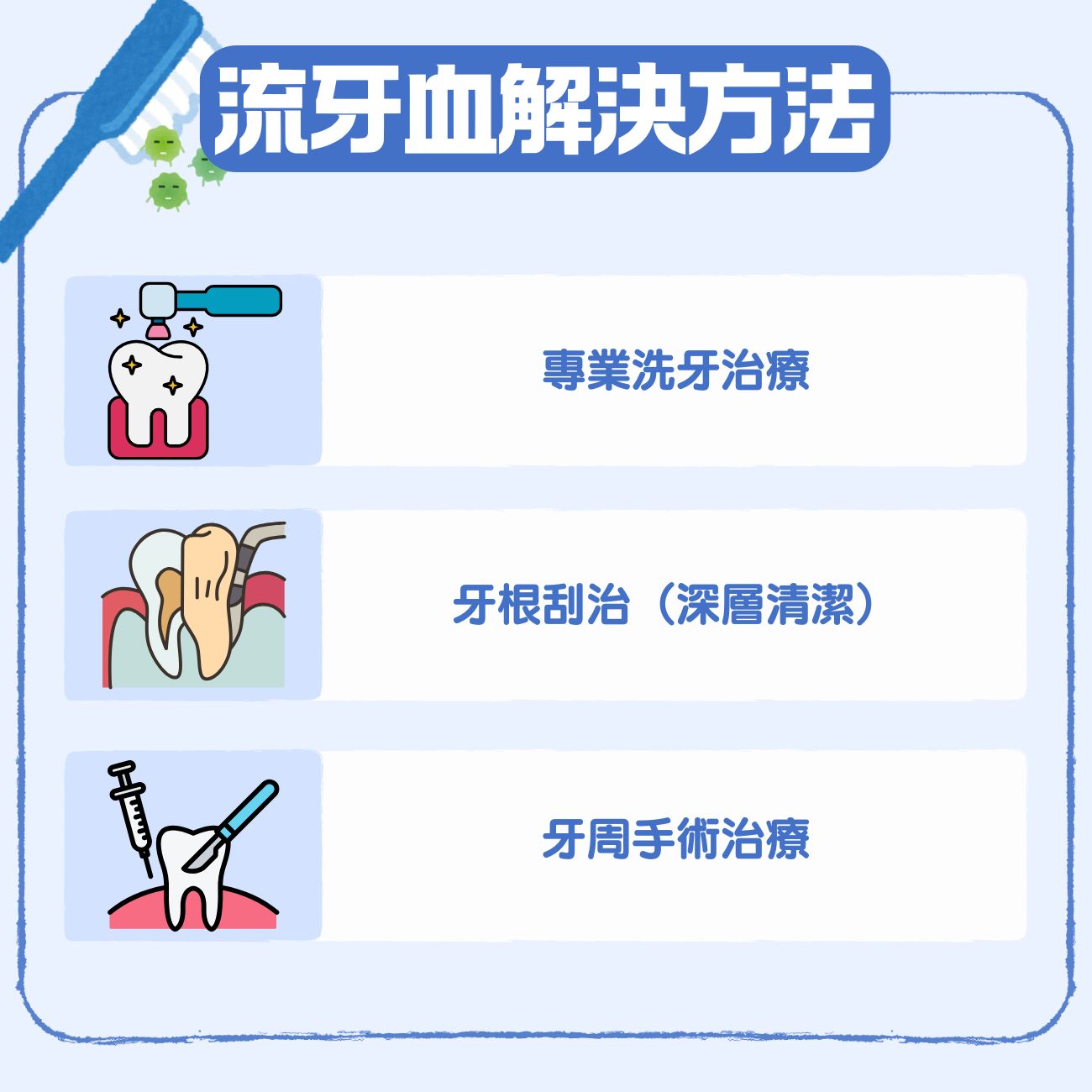
Professional scaling
Scaling removes plaque and tartar and restores gum health. It is generally recommended to have scaling once every six months.
Scaling not only improves bleeding but also reduces bad breath. If it is only at the gingivitis stage, symptoms usually improve noticeably within a few days after scaling.
Root planing (deep cleaning)
When the inflammation has reached deep into the periodontal pockets and scaling alone is not enough, "root planing" or "deep cleaning" is needed.
This uses special instruments to remove tartar and infected tissue below the gum line, helping the periodontal tissue to reattach and preventing the inflammation from getting worse.
Periodontal surgery
Forsevere periodontal disease, the dentist will carry out "periodontal flap surgery" or "bone regeneration surgery" to clear the deep infected areas and repair the bone tissue. This type of surgery is an intermediate to advanced treatment, and the recovery period takes about several weeks.
Further reading:Bleeding gums: don't panic! A professional dentist teaches you 3 ways to deal with bleeding gums and tips for prevention
How can I prevent bleeding gums?
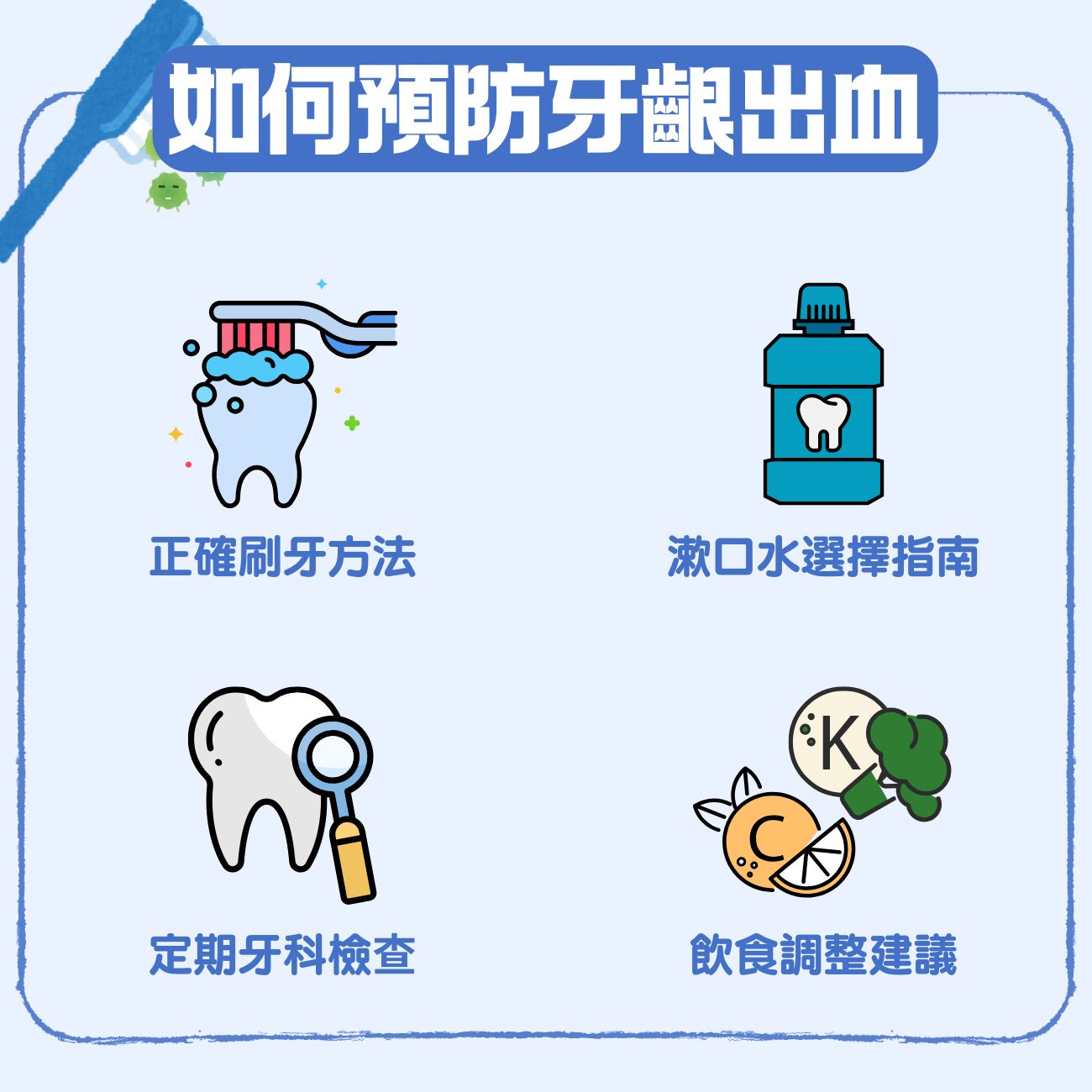
correct toothbrushing method
Use a soft-bristle toothbrush with the Bass technique, brushing gently with the bristles at a 45-degree angle to the gums for at least two minutes each time, so that cleaning is effective without hurting the teeth and gums.
Good oral hygiene includes cleaning the teeth once in the morning and once at night, and changing your toothbrush every three months, to avoid harm to the gums from bristles that are too hard or worn.
Guide to choosing a mouthwash
You can consult your dentist or pharmacist to choose a suitable mouthwash, which helps reduce plaque biofilm. However, it is not advisable to overuse high-alcohol mouthwash, as it can irritate the gums.
regular dental check-ups
Even if you have no discomfort, you should have a check-up and scaling every six months. Spotting tartar build-up or periodontal problems early can prevent them from developing into chronic periodontal disease.
Dietary advice
Eat more foods rich in vitamins C and K, such as kiwi fruit, spinach and green peppers, which help keep blood vessels and gums healthy. Avoid too much sugar, coffee, smoking and alcohol, as these all increase the chance of periodontal inflammation.
Special advice for high-risk groups
Pregnant women, people with diabetes, smokers, people on long-term medication and people with periodontal disease should pay closer attention to bleeding gums. It is advisable to keep up regular follow-up with your dentist and increase cleaning frequency if necessary.
FAQ
Why do my gums bleed as soon as I brush?
This is usually an early sign of gum inflammation. The build-up of plaque biofilm makes the tiny blood vessels in the gums fragile, so slight friction causes bleeding. To improve it, use a soft-bristle toothbrush, brush correctly and add flossing.
Are bleeding gums a sign of periodontal disease?
Yes. Frequently bleeding gums usually indicate that periodontal inflammation has developed. Without treatment, the bone that supports the teeth will be lost and the teeth will become loose. The earlier it is treated, the better the chance of full recovery.
Is it normal for gums to bleed when brushing during pregnancy?
Hormonal changes during pregnancy make the gums more sensitive, so slight bleeding is common. But if the bleeding is obvious or comes with swelling and pain, a dentist should still check whether you have periodontal disease.
Summary
Bleeding gums are not a minor problem but a warning sign from your oral health, and every signal is a reminder to take the cleaning and checking of your teeth and gums seriously. If you notice persistent bleeding, worsening bad breath or swollen gums, it is advisable to book a dental check-up straight away, so that a professional dentist can help find the real cause and improve the problem at its root, letting your smile become healthy and confident again.
Disclaimer
This article is for information only and does not contain any invitation or solicitation. Patients should seek a professional dentist for diagnosis and treatment according to their own circumstances. To find out more or book a service, we recommend contacting the relevant clinic directly. Please choose suitable dental services and clinics carefully yourself.



