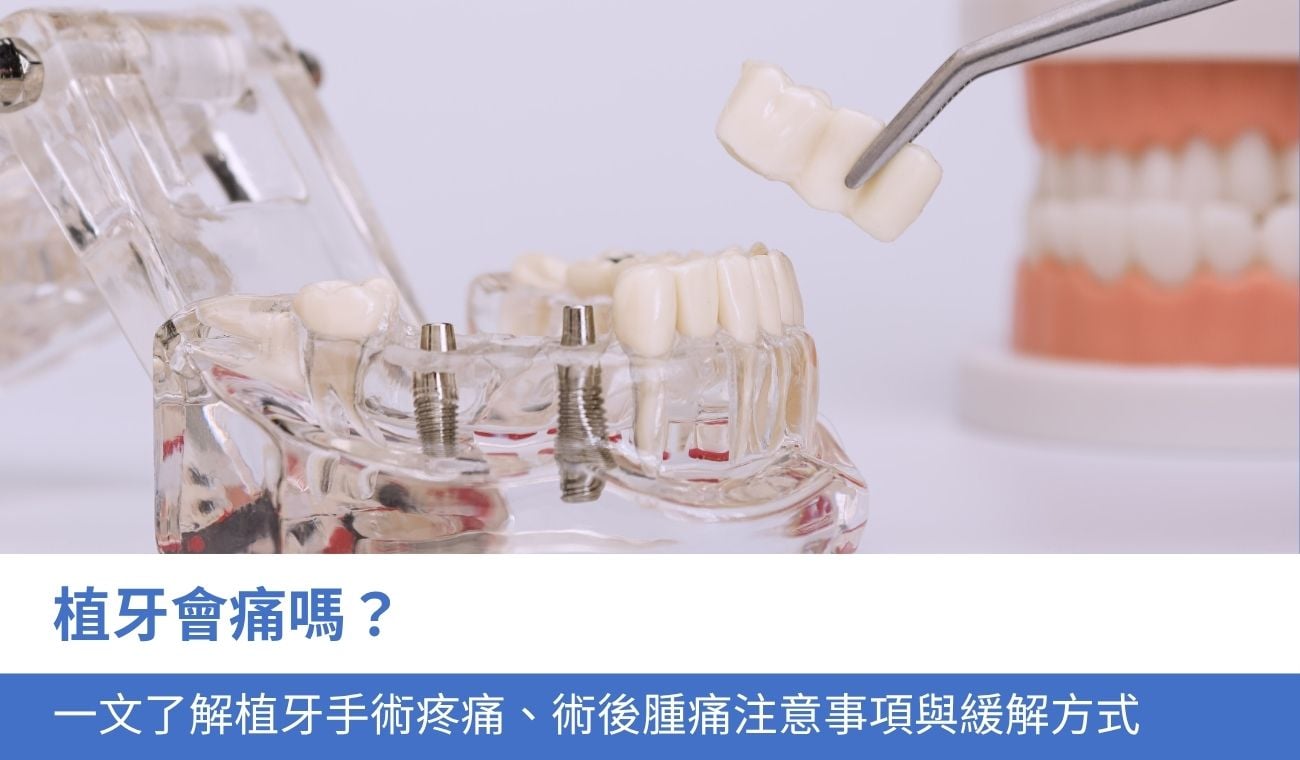
Implant surgery is carried out under local anaesthesia, and most patients only feel pressure and vibration during surgery; discomfort is generally concentrated in the 2 to 3 days after surgery.
Key Points
- Mild swelling and traces of blood 1 to 5 days after surgery are normal reactions
- Swelling and pain that get worse after 3 days, or a fever, need a follow-up visit
- For the first 3 days after surgery, mainly eat lukewarm or cool, soft foods
- Apply cold compresses for the first 48 hours, then switch to warm compresses
Does Implant Surgery Hurt? What It Feels Like Under Local Anaesthesia
Implant surgery is carried out under local anaesthesia. Once the anaesthetic takes effect, most patients only feel pressure and mechanical vibration as the dentist works. Anaesthesia blocks pain, but touch and pressure can still be felt, so feeling the dentist working does not mean the anaesthetic has not worked.
How Many Days Does It Hurt After an Implant? Normal Reactions 1 to 5 Days After Surgery
After the anaesthetic wears off, there will be a dull ache and swelling at the wound, which gradually subside after the first 2 to 3 days. The following within 1 to 5 days after surgery are common reactions during tissue repair:
- Mild swelling and pain at the wound
- A little blood in your saliva
- Slight bruising on the cheek
Post-operative experience varies from person to person; swelling and bruising may be more noticeable if an extraction, bone grafting or multiple implants are done at the same time.
What Problems After an Implant Need a Follow-up Visit? 4 Signs to Watch For
To tell normal from abnormal, look at how the reaction changes over time rather than just whether there is pain: normal swelling and pain ease day by day, so if things get worse after the first few days or new symptoms appear, it is not a normal healing reaction.
If any of the following occurs after an implant, arrange a follow-up visit as soon as possible:
- Swelling and pain getting worse rather than better after 3 days, or accompanied by fever: may be related to a wound infection
- Persistent heavy bleeding from the wound: a large amount of fresh blood keeps flowing from the wound
- Persistent numbness or tingling in the chin, lip or tongue: if sensation has not returned after the anaesthetic has worn off, the nerve may have been affected
- The implant or temporary tooth is noticeably wobbly: a wobbling implant during osseointegration may be a sign that it has not bonded with the bone. For the causes and treatment of early failure, see after-effects of dental implants
What to Watch Out for After an Implant: Eating, Cleaning, Cold and Warm Compresses
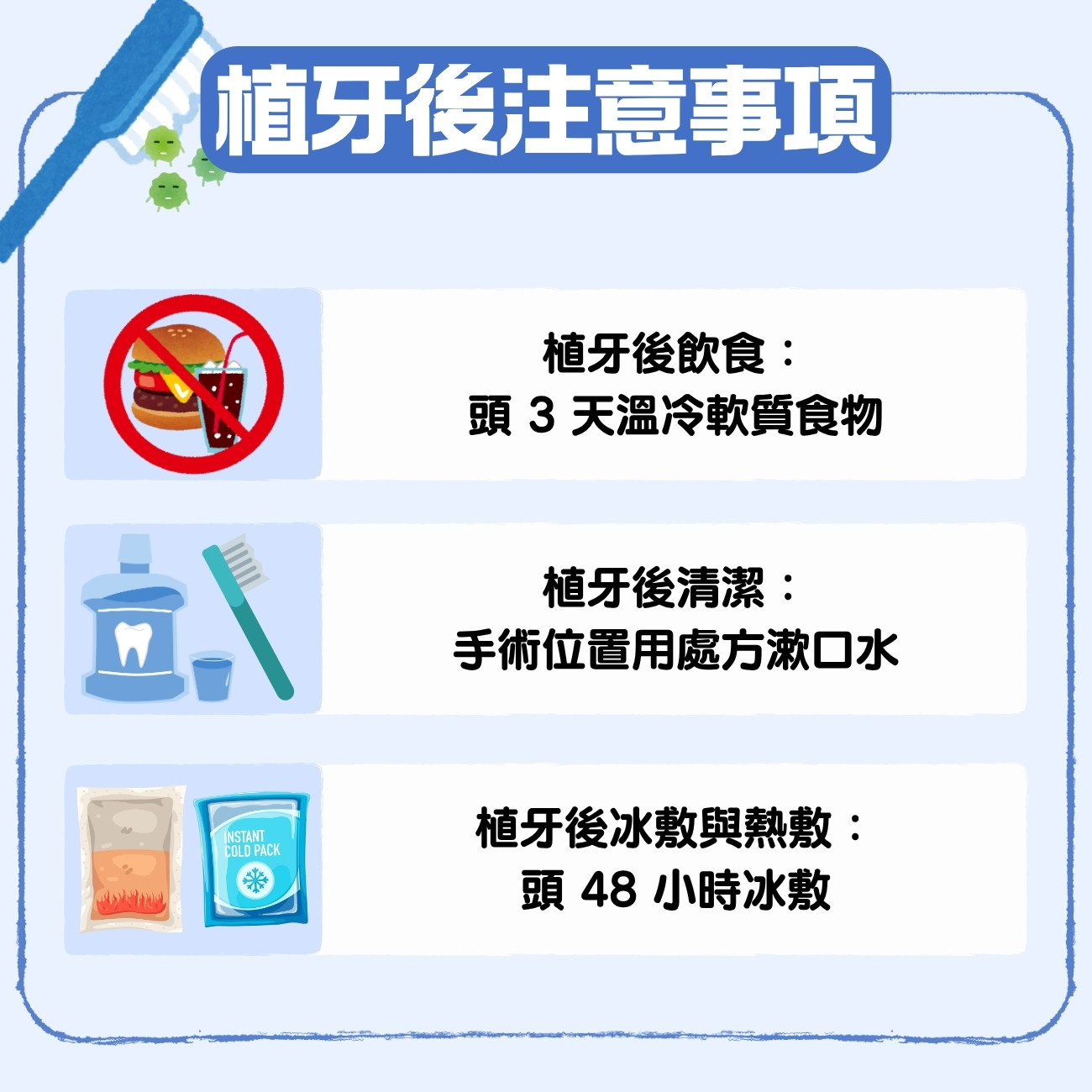
The eating, cleaning and cold compress arrangements for the first few days after surgery are all aimed at reducing irritation to the surgical wound so the gum and bone can heal well around the implant. These arrangements generally only need to continue until the wound has initially healed, after which you can return to your usual habits as instructed by your dentist.
Eating after an implant: lukewarm or cool, soft foods for the first 3 days
For the first 3 days after surgery, eat lukewarm or cool, soft foods such as congee, oats or soup that has cooled down; avoid very hot, spicy or irritating foods. Avoid using a straw during this time too, as sucking creates negative pressure in the mouth, which can easily make the wound bleed again.
Cleaning after an implant: use the prescribed mouthwash at the surgical site
For now, do not brush the surgical site directly with a hard-bristled toothbrush; instead, gently rinse with the antiseptic mouthwash prescribed by your dentist and spit it out. Brush other areas as usual. Once the wound has healed and the crown is fitted, for how cleaning implants differs from natural teeth and suitable cleaning tools, see how long can a dental implant last.
Cold and warm compresses after an implant: cold compresses for the first 48 hours
For the first 48 hours after surgery, apply a cold compress to the outside of the cheek, 20 minutes on and 20 minutes off, to reduce swelling. After 48 hours, switch to warm compresses to help blood circulation and clear bruising. Take painkillers or other medication at the times and doses prescribed by your dentist.
FAQ
Which hurts more: a dental implant or a wisdom tooth extraction?
Post-operative experience after a dental implant or a wisdom tooth extraction varies from person to person, and many patients describe the dull ache and swelling after an implant as milder than after a wisdom tooth extraction. However, the extent of surgery differs for each person, so you should not rely on this comparison alone to predict how you will feel after surgery.
What is implant surgery under sedation, and who is it suitable for?
Implant surgery under sedation is carried out under intravenous sedation, putting you in a relaxed, lightly sleeping state, usually still combined with local anaesthesia. If you feel nervous about surgery, you can discuss with your dentist whether it is suitable for you. Whether it can be used depends on an assessment of your general health, and there are arrangements such as fasting before surgery and having someone accompany you home, which you need to know in advance.
Does it hurt when the abutment and crown are fitted?
The main discomfort with implants comes after the surgery to place the implant. Fitting the abutment and crown after osseointegration generally causes less discomfort, and local anaesthesia is used if the gum needs treatment. For the 4 stages of the whole implant process and how long each takes, see Dental Implants Explained.
Summary
Before your implant, ask your dentist roughly how long you will need to rest after surgery and how to take prescribed medication, and note the 4 signs that need a follow-up visit.
Article last updated: 2026-11
Disclaimer
This article is for information only and does not contain any invitation or solicitation. Patients should seek a professional dentist for diagnosis and treatment according to their own circumstances. To find out more or book a service, we recommend contacting the relevant clinic directly. Please choose suitable dental services and clinics carefully yourself.