
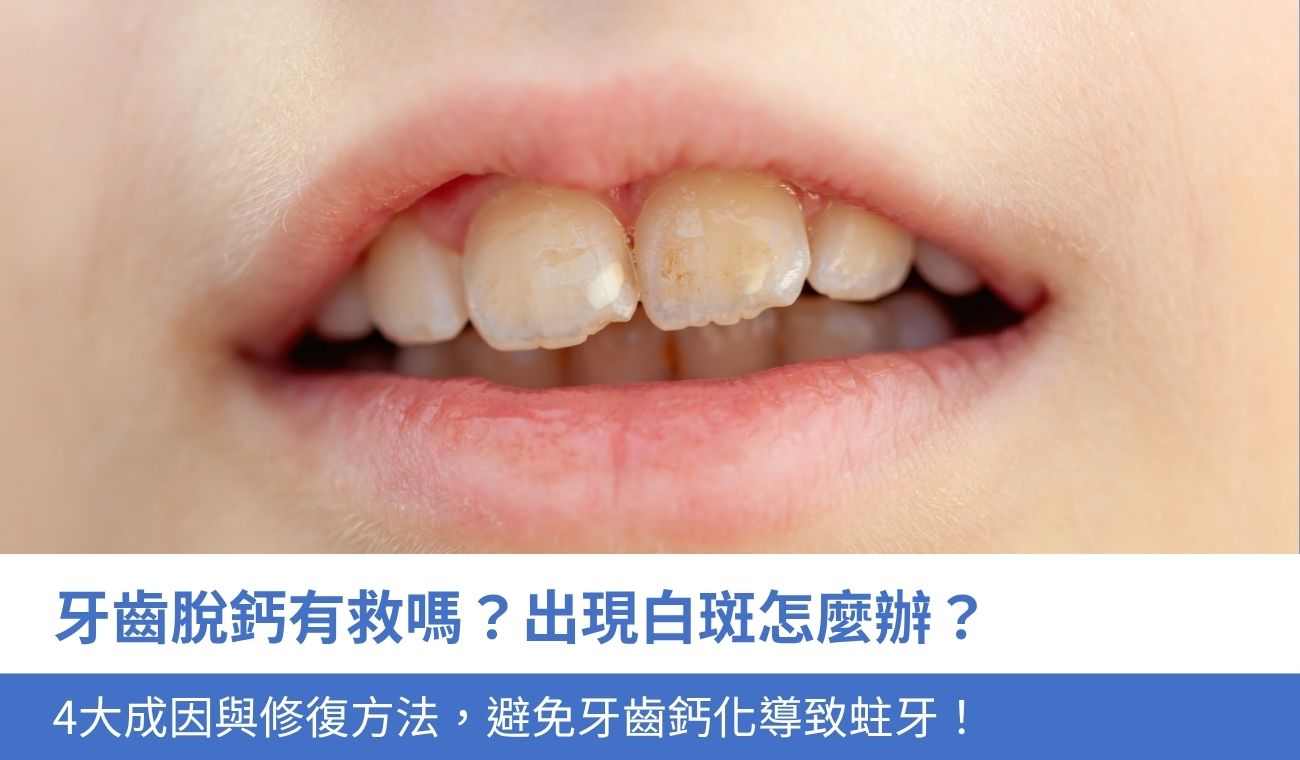
Tooth demineralisation is the appearance of white spots when enamel loses minerals, and it is early damage that can be reversed. With correct cleaning, fluoride products and dietary adjustment, most cases can repair naturally; severe cases need professional treatment.
Why do teeth become demineralised? 4 causes of tooth demineralisation
Demineralisation is in fact the loss of minerals from the tooth enamel. When the surface layer of the tooth lacks calcium protection, white spots, roughness and eventooth decayappear easily. Let's look at the common causes of tooth demineralisation:
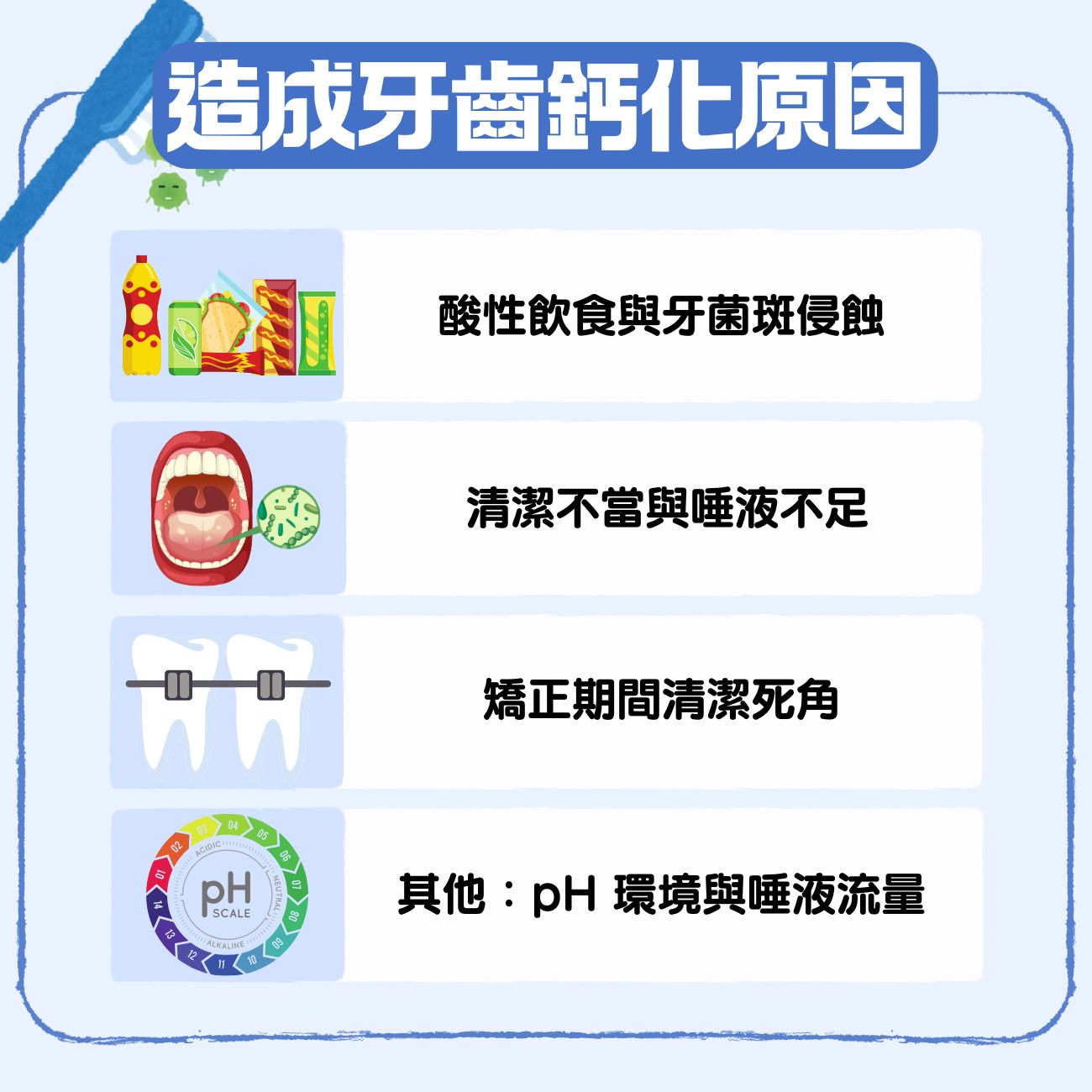
Acidic diet and plaque erosion
Our teeth deal with food every day, especially snacks, sugary drinks or acidic foods, all of which make the oral environment acidic.
When acidic substances remain, the enamel on the tooth surface may be eroded and calcium is gradually lost. In addition, bacteria in plaque produce acid after breaking down food debris, and with both effects together demineralisation is more likely to occur.
Improper cleaning and insufficient saliva
If brushing is not thorough enough or the spaces between teeth are neglected, plaque easily builds up and keeps the teeth in an acidic environment for a long time.
Saliva plays an important role, as it naturally helps neutralise acid and replenish minerals for the teeth. If saliva is insufficient because of a dry mouth, low water intake or the side effects of certain medications, the teeth's ability to repair themselves is reduced, and the risk of demineralisation also rises.
Hard-to-clean areas during orthodontic treatment
People with braces are particularly prone to tooth demineralisation, because braces create many hard-to-clean spots where food debris gets stuck and is hard to brush away.
Over time, white spots appear around the braces – a clear sign of demineralisation. If not treated early, permanent marks will remain after the braces are removed.
Others: pH environment and saliva flow
Besides diet and cleaning, the acidity (pH) of the mouth and the flow of saliva also affect oral health.
Frequently drinking soft drinks or coffee, grinding teeth or having a dry mouth from stress, and even incorrect breathing patterns at night can all change the natural balance of the mouth, making tooth demineralisation more likely to occur.
What signs show that teeth are demineralised?
Many people find this term unfamiliar when they first hear it, but it is in fact one of the early warning signs of tooth decay. If it is found and dealt with early, in many cases it can be reversed and does not necessarily develop into real tooth decay.
White spots appear
The most typical sign of demineralisation is patches of white spots on the tooth surface. These white spots differ in colour from the rest of the tooth and look dull. They are in fact a warning that the tooth has lost minerals, and an early sign of tooth decay.
The surface becomes rough
Healthy teeth feel smooth and even to the touch, but when the outermost layer of enamel starts to be lost, the tooth becomes rough and may even feel slightly pitted. This means its protection has declined and action is needed quickly to protect it.
Tooth sensitivity or pain
Some people feel soreness or a sharp pain when eating ice or drinking hot drinks, which can also be related to demineralisation. Because the outer enamel becomes fragile once damaged, it is more easily affected by outside stimuli, leading to tooth sensitivity or slight pain.
Tooth demineralisation:what to do? Common ways to improve and treat it
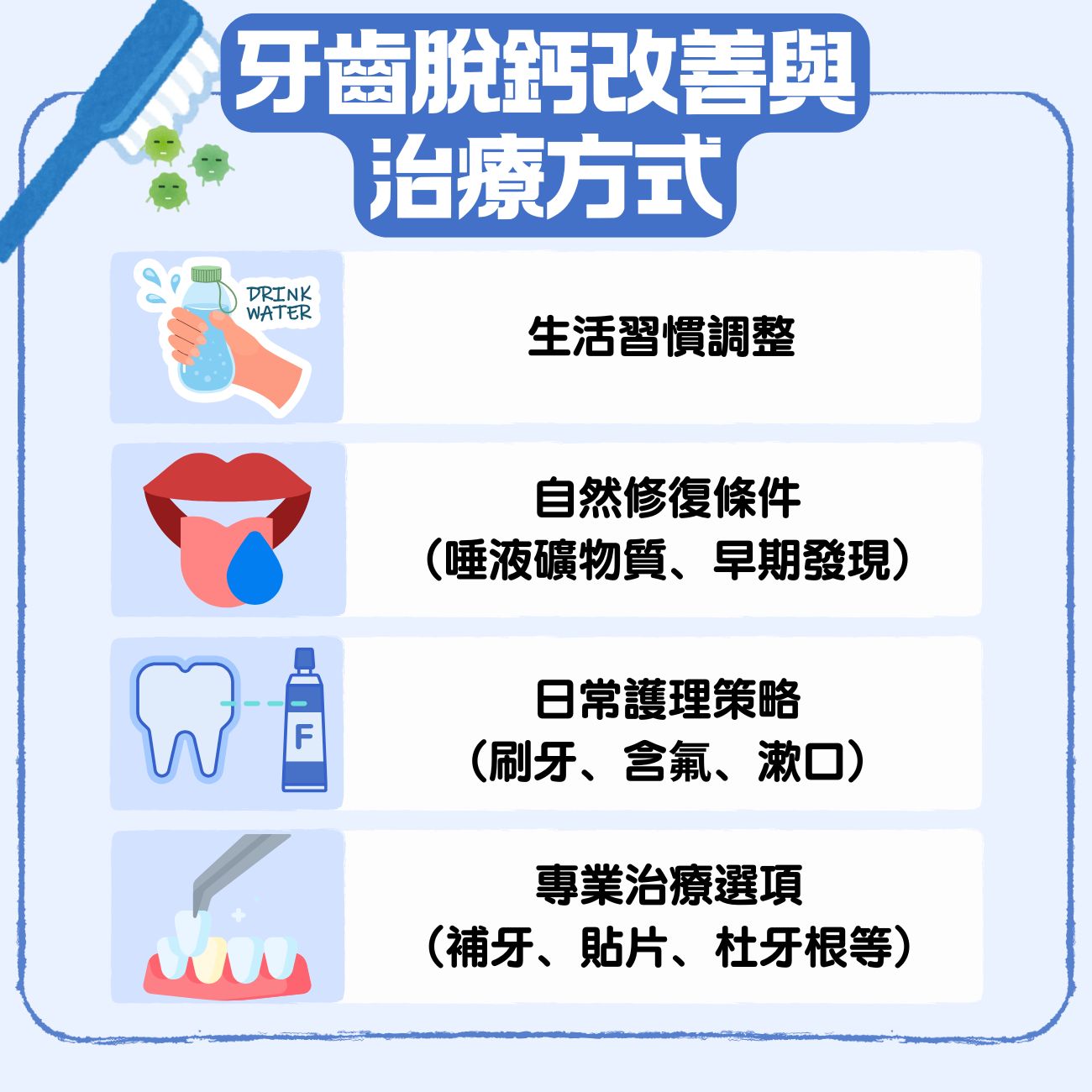
lifestyle adjustments
To improve demineralisation, the first step is to adjust your daily habits.
Drink fewer sugary drinks, eat fewer acidic snacks and drink more water to keep the mouth fresh and moist. At the same time, develop regular habits of brushing and flossing, so that the teeth have a chance to repair.
Conditions for natural repair (minerals in saliva, early detection)
If demineralisation is still at an early stage and there is no obvious cavity on the surface, the calcium and phosphate in saliva together with fluoride products can still help the tooth recover its original hardness and health. This is known as "remineralisation".
Daily care strategies (brushing, fluoride, mouthwash)
Brush at least twice a day with fluoride toothpaste to remove plaque, and clean between the teeth with floss. If your dentist recommends it, you can also use a fluoride mouthwash to strengthen the enamel.
For people prone to a dry mouth, you can carry sugar-free chewing gum with you to stimulate saliva flow and reduce the damage from an acidic environment.
Professional treatment options (fillings, veneers, root canal treatment and so on)
When the tooth already has obvious damage from demineralisation, professional treatment for demineralisation may be needed.
Common treatments for tooth demineralisation include topical application of high-concentration fluoride, resin infiltration (especially suitable for white spots after orthodontic treatment), and fillings or ceramic veneers to restore the appearance. If demineralisation progresses to the pulp chamber and causes pulp necrosis, root canal treatment may even be needed.
Different situations are handled differently, so it is advisable to consult a dentist before treating your teeth.
FAQ
How can I replenish calcium in my teeth?
The most effective way is not simply to take calcium tablets, but to use fluoride toothpaste and mouthwash, together with the minerals in saliva, to help the teeth remineralise. Eating more dairy products and dark green vegetables in your diet also helps replenish calcium.
Can demineralised teeth be saved? What should I eat?
As long as no cavity has formed, demineralised teeth have a chance of reversing. Besides daily oral cleaning, take in more calcium, vitamin D and phosphorus, so that the body has enough minerals to help the teeth repair.
Do braces make teeth more prone to calcification?
In fact, braces are not the root cause of demineralisation; the problem is that they make cleaning harder. Dirt easily collects around braces, and if you don't brush carefully, white spots appear on the teeth. So people with braces need to pay extra attention to oral hygiene!
Summary
Tooth demineralisation may sound frightening, but it is really your teeth reminding you: "time to take good care of me". If you have already noticed white spots or sensitivity on your teeth, it is best not to delay and to have a dentist check them soon, to prevent them from getting worse and turning into tooth decay. To protect your dental health, start taking action today!
Disclaimer
This article is for information only and does not contain any invitation or solicitation. Patients should seek a professional dentist for diagnosis and treatment according to their own circumstances. To find out more or book a service, we recommend contacting the relevant clinic directly. Please choose suitable dental services and clinics carefully yourself.



