

Tonsillitis causes a sore throat and difficulty swallowing. The diet should mainly be warm, soft food, and you can ease it by drinking more water and gargling with salt water. If a high fever does not go down or it recurs, we recommend seeing a doctor early.
Almost everyone has had tonsillitis at some point, but are the symptoms of tonsillitis the same as a sore throat? What should you eat to ease tonsillitis faster? One article to understand the causes, how contagious it is and ways to relieve it, to help ease discomfort such as a sore throat and difficulty swallowing.
Ways to ease tonsillitisWhat are they?
When you feel discomfort in the throat, have a slight fever and find swallowing saliva uncomfortable, it is very likely tonsillitis. If you do not know what to do, you may wish to start with some simple everyday methods, which may help reduce the discomfort.
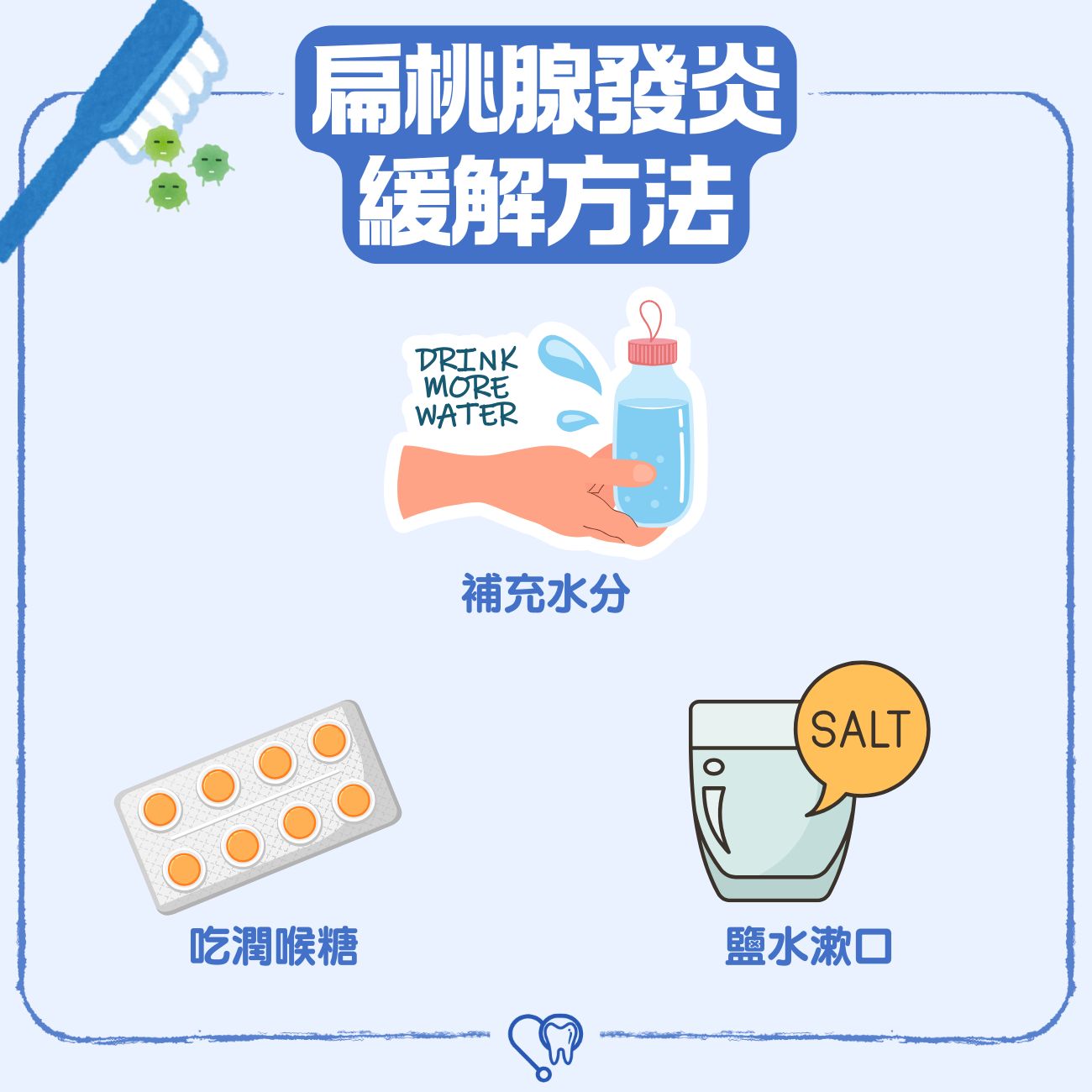
Stay hydrated
The most important thing is to get enough fluids. Drinking more warm water helps keep the throat moist and also helps dilute the bacteria in the mouth. You can also cut down on smoking and drinking first, so as not to make the throat inflammation worse.
Throat lozenges
Throat lozenges are also a good option. Choose lozenges containing herbal or mint ingredients, which can temporarily ease a swollen and sore throat. But remember not to eat too many high-sugar sweets, to avoid increasing bacterial growth in the mouth.
Gargling with salt water
Gargling with warm salt water a few times a day can reduce the number of bacteria in the mouth, and also helps reduce inflammation and kill germs. It does not need to be too strong; a cup of warm water with half a teaspoon of salt is enough.
What should I eat to recover faster from tonsillitis?
When the tonsils are inflamed, choosing the right food can speed up recovery. But remember the first principle: eat food that is mild, soft and easy to swallow.
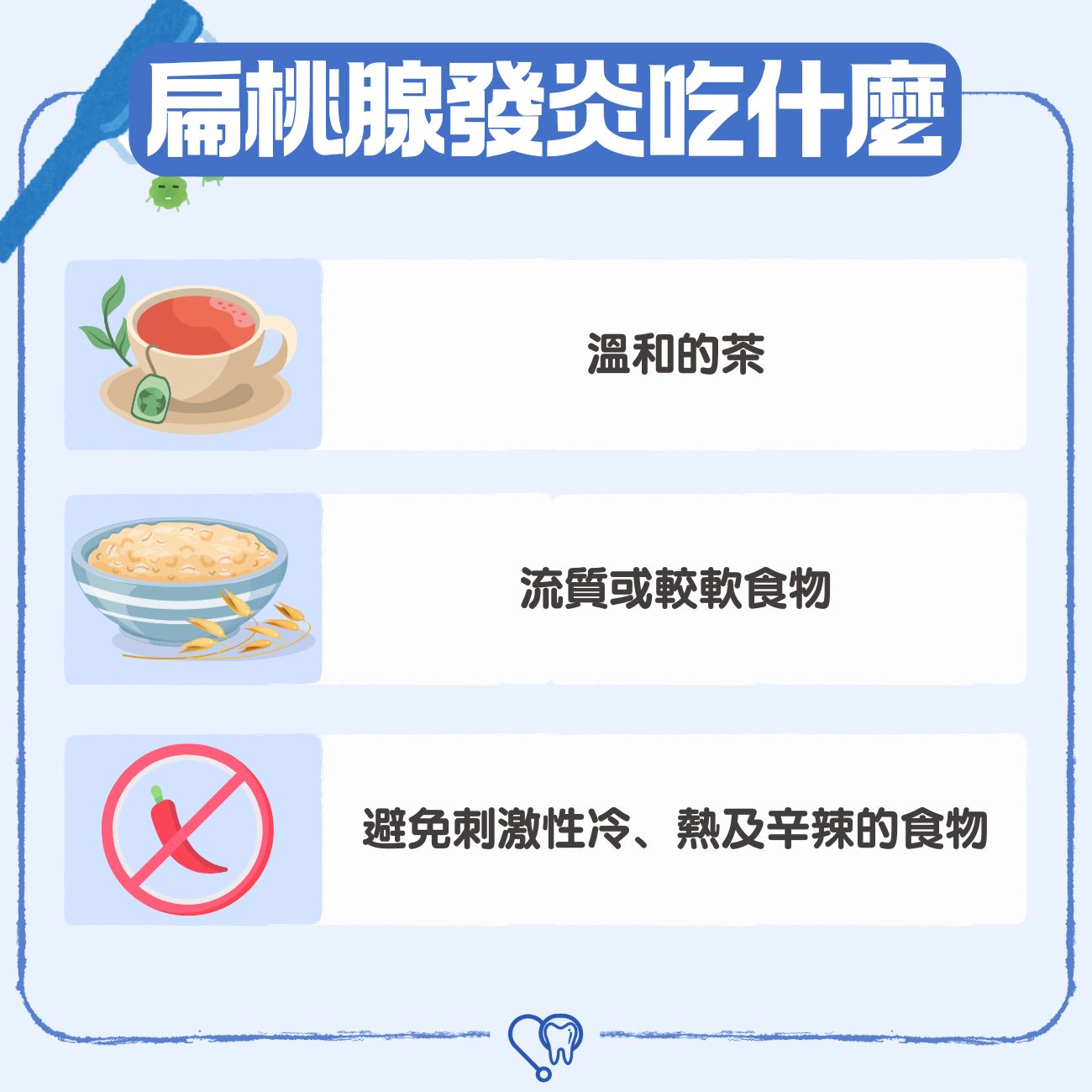
Mild teas
You can drink lukewarm water, honey water, unsweetened herbal tea (such as chrysanthemum or honeysuckle) and weak green tea, to help ease throat inflammation. It is not advisable to drink beverages that are too hot, too cold or contain caffeine, as temperatures that are too high or too low will irritate the tonsils and make the discomfort worse.
Liquid or softer food
Liquid or soft food is the recommended choice. Plain congee, steamed egg, stews, mashed potato and mashed banana provide plenty of nutrition and do not put extra strain on the throat. If you eat anything hard, dry or too spicy, it is very likely to add to the strain on the throat.
Avoid irritating cold, hot and spicy food
During inflammation you should avoid irritating food such as spicy hot pot, fried food, curry, barbecue and iced drinks. It is safer to return to a normal diet only after you have fully recovered.
Is tonsillitis the same as a sore throat? A full understanding of tonsillitis
The symptoms of a sore throat and tonsillitis are very similar, and if treatment is delayed, it may lead to more serious inflammation and evenstones.
A sore throat is a symptom, and may include pain in the tonsils, nasopharynx and other areas. Tonsillitis is an infection of a specific area, and usually comes with severe throat pain, difficulty swallowing, fever and sometimes visible pus spots.
Put simply, tonsillitis always causes a sore throat, but a sore throat is not necessarily tonsillitis.
Location of tonsillitis
The tonsils(the tonsils) are lymphoid tissue on either side at the back of the throat, part of the upper respiratory tract. They are the two slightly raised areas of tissue you can see when you open your mouth and press the tongue down.
They are part of the immune system and normally help block bacteria and viruses. But when these pathogens are too strong, they in turn become infected and red and swollen, which is what is called tonsillitis.
Causes of tonsillitis
Tonsillitis is usually caused by infection with germs. For example, cold viruses, enteroviruses, influenza viruses, adenoviruses and group A streptococcus are all common. Sometimes stress, lack of sleep and lowered immunity may also make you more susceptible to viral infection.
Symptoms of tonsillitis
Symptoms vary from person to person, but the most common include: severe sore throat, difficulty swallowing, hoarse voice, fever, worsening breath, and even pain and swelling in the ear or neck. Some people see white or yellow pus spots on the tonsils, which means pus has already formed.
Acute vs chronic vs recurrent tonsillitis
Acute tonsillitis is very common, most often seen in children aged 5-10 and young people aged 15-25. The symptoms are obvious, and it usually improves gradually after a few days of treatment.
Chronic tonsillitis is long-term mild inflammation that comes and goes, with the throat often feeling uncomfortable. Recurrent tonsillitis is repeated attacks within a short time, which easily affects quality of life, and in this situation a doctor may need to assess whether a tonsillectomy is needed.
Is tonsillitis contagious?
Inflammation caused by bacteria or viruses is contagious! Infection is possible especially through droplets or contact with an infected person's nose and mouth secretions.
So if you have symptoms of tonsillitis, avoid sharing utensils and towels with others as far as possible, wash your hands often and wear a mask to lower the risk of spreading it.
How is tonsillitis treated?
Will tonsillitis go away on its own?
Mild viral tonsillitis can indeed recover through the body's own immunity. With plenty of rest, more water and attention to diet, it gradually improves in about a week. But if the symptoms are severe or do not go away, further treatment is needed.
Situations where you must see a doctor
If you have a high fever that does not go down, trouble swallowing, difficulty breathing, a swollen neck or enlarging pus spots, you should see a doctor immediately.
The doctor will prescribe antibiotics or other medicines according to the source of infection, and sometimes arrange blood tests or a throat swab to confirm the cause, so as to avoid more serious complications.
FAQ
How long does it take for tonsil pus to clear?
Generally, if there is pus, treatment with the correct antibiotics improves it in about 3 to 5 days. During this time take the medication on time and do not stop on your own, otherwise bacteria may become resistant or the infection may recur. You can also ask an ear, nose and throat doctor to use special instruments to help clear this bacteria-laden pus and speed up repair of the mucosa.
How many days does tonsillitis take to clear up?
This depends on whether it is a viral or bacterial infection. Viral inflammation usually eases gradually in 3 to 7 days, while bacterial infection takes effect faster after medication. If the inflammation is chronic or recurrent, the recovery period may be longer.
Can I eat cold food when I have tonsillitis?
Although some people feel that eating something cold makes the throat hurt less for a while, in fact the cold stimulation makes the mucosa contract and affects blood circulation, which is not good for repair of the inflamed area. We recommend sticking mainly to warm, soft food and drinks that are easy to swallow.
Summary
Tonsillitis may seem like a minor illness, but if it is ignored it may get worse or even recur, affecting daily life. Paying attention to care from the early stage of symptoms is the key to preventing it from getting worse. If the symptoms are severe or keep coming back, do not try to tough it out. See a doctor early and let a professional doctor help you solve the problem at its root, so you can truly stay free of discomfort.
Disclaimer
This article is for information only and does not contain any invitation or solicitation. Patients should seek a professional dentist for diagnosis and treatment according to their own circumstances. To find out more or book a service, we recommend contacting the relevant clinic directly. Please choose suitable dental services and clinics carefully yourself.



