Article last updated: 2026-07
Root canal treatment is carried out throughout with local anaesthesia, and most patients do not have obvious pain. Knowing some relaxation techniques can reduce tension during treatment.
Key points of this article
- Anaesthesia is given in two stages to reduce the pain of the injection
- A hand-raising signal lets treatment be paused at any time
- Slight sensation after the procedure is a normal part of recovery
- The discomfort during the process is usually similar to that of a filling
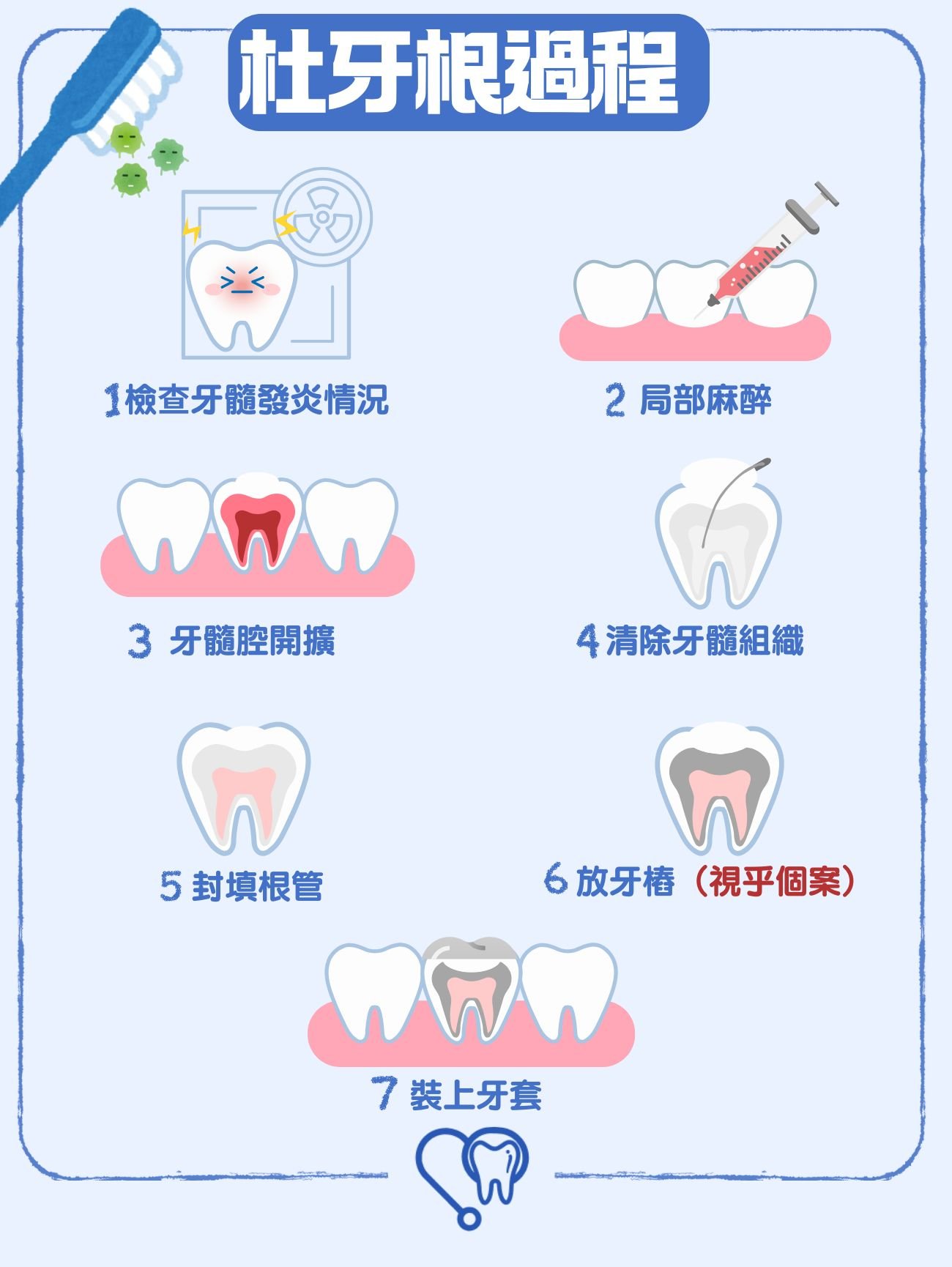
Quick comparison of the five stages of root canal treatment
| Stage | Key points on pain and anaesthesia |
| Initial assessment | No pain, only clinical examination and X-ray assessment |
| Anaesthesia and opening the pulp chamber | The key period for pain management, with surface and local anaesthesia throughout |
| Cleaning and disinfection | Mostly a feeling of fullness, and you can respond at any time with a pause signal |
| Root canal filling | Usually no obvious discomfort |
| Crown restoration | There may be slight sensation for a short time, which is a normal part of recovery |
Anaesthesia and opening the pulp chamber: tell the dentist directly if you feel pain
If the anaesthetic is not working well enough, simply tell the dentist, who will give more anaesthetic or inject at a different site; there is no need to put up with it and wait for it to take effect by itself.
Before the anaesthetic is given, the dentist will usually first apply an anaesthetic gel to the surface of the gums, and only inject after the surface is numb, so the sting of the needle is much lighter. If the tooth is acutely inflamed, the anaesthetic sometimes works less well, and the dentist will then change the dose or the way of injecting to make up the effect.
- Common myth: is root canal treatment painful throughout?
For most of the time during treatment, anaesthetic is at work. What really hurts is the period of pulp inflammation before treatment, not the treatment itself.
Cleaning and disinfection: you can also call a stop partway through
If treatment takes longer, you can ask the dentist to pause partway through so that the muscles of the jaw and neck can relax before continuing; there is no need to hold out until everything is finished before resting.
Feeling tense during treatment is often not because of pain, but because you do not know what step is being done now or are unsure whether you can call a stop. You can agree a pause gesture with the dentist before treatment, and raise your hand when you need to stop, which gives more peace of mind.
If you also use deep breathing during the procedure, putting your attention on your breathing rather than on what the dentist's hands are doing, the tension will gradually ease. Cleaning and disinfection sometimes has to be done over several visits with medication placed in between, so that the medication has enough time to deal with the bacteria deep in the root canals, and it is not because something has gone wrong with treatment.
💡 Tip: If you tend to feel nervous, try to book a time when you feel relaxed and have plenty of time, rather than squeezing it into a gap when you are in a hurry, and the mental pressure before treatment will be much lower.
Root canal filling and crown restoration: what to watch for after the anaesthetic wears off
If the feeling of fullness has not gone after more than a week, or the swelling is obvious or fever starts, you do not need to wait for the scheduled follow-up date, and it is advisable to phone and return early to have it dealt with.
After root canal treatment, the tooth may still have some sensation for a short time. This is the inflamed tissue around the root still recovering, and it fades gradually over time, and does not mean the treatment was not done well. Until the anaesthetic wears off, the lips and tongue remain numb, so be careful when biting during this time, so that you do not bite yourself without knowing it.
For how to look after yourself after the procedure and how to take painkillers, see "Complete guide to aftercare for root canal treatment".
Comparing the pain of the root canal treatment process with other treatments
The difference in pain between root canal treatment and a filling is usually not great. Which treatment to choose still depends on whether the tooth can be kept, and not on which one hurts less.
Many patients say that the feeling during root canal treatment is much the same as a filling, much easier than the severe pain of the pulp inflammation before treatment, and far less frightening than imagined.
If you are still hesitating over how to choose between root canal treatment and extraction, pain is only one consideration. For a full comparison, see "Root canal treatment vs extraction: a full comparison"
FAQ
Does root canal treatment hurt?
For most of the treatment itself, anaesthetic is at work, and the pain is mainly concentrated in the stage of pulp inflammation before treatment. If the anaesthetic is not effective enough, you can tell the dentist at any time to have it adjusted, and there is no need to put up with pain to complete treatment.
Roughly how long does each root canal treatment visit take?
The time needed for each visit depends on the number of root canals in the tooth and the severity of infection, and the dentist will give an estimated time after assessment; it is not fixed.
What can I do if I feel uncomfortable during treatment?
You can agree a pause signal with the dentist before treatment, so that you keep room to respond actively during treatment, rather than waiting until treatment is over to say so.
Is it normal for the tooth to still have sensation after treatment is completed?
Slight sensation for a short time is mostly because the tissue around the root is still recovering, and it eases gradually over time. If the sensation keeps getting worse or lasts longer than expected, you should return early to find out what is happening.
Which is more uncomfortable, root canal treatment or extraction?
Both involve anaesthesia at the time of treatment, and discomfort is generally low. Which treatment suits better depends on whether the tooth itself can be kept.
Summary
Discomfort during root canal treatment is mainly controlled through anaesthesia techniques, while tension during treatment can be eased with a pause signal and breathing control. Slight sensation for a short time after treatment is completed is a normal part of recovery, and there is no need to worry too much. For complete information on root canal treatment, see:Complete guide to root canal treatment in Hong Kong.
Disclaimer
This article is provided for information only and does not contain any invitation or solicitation. Patients should seek a professional dentist for diagnosis and treatment according to their own circumstances. For further information or to book a service, it is advisable to contact the relevant clinic directly. Please choose suitable dental services and clinics carefully yourself.