
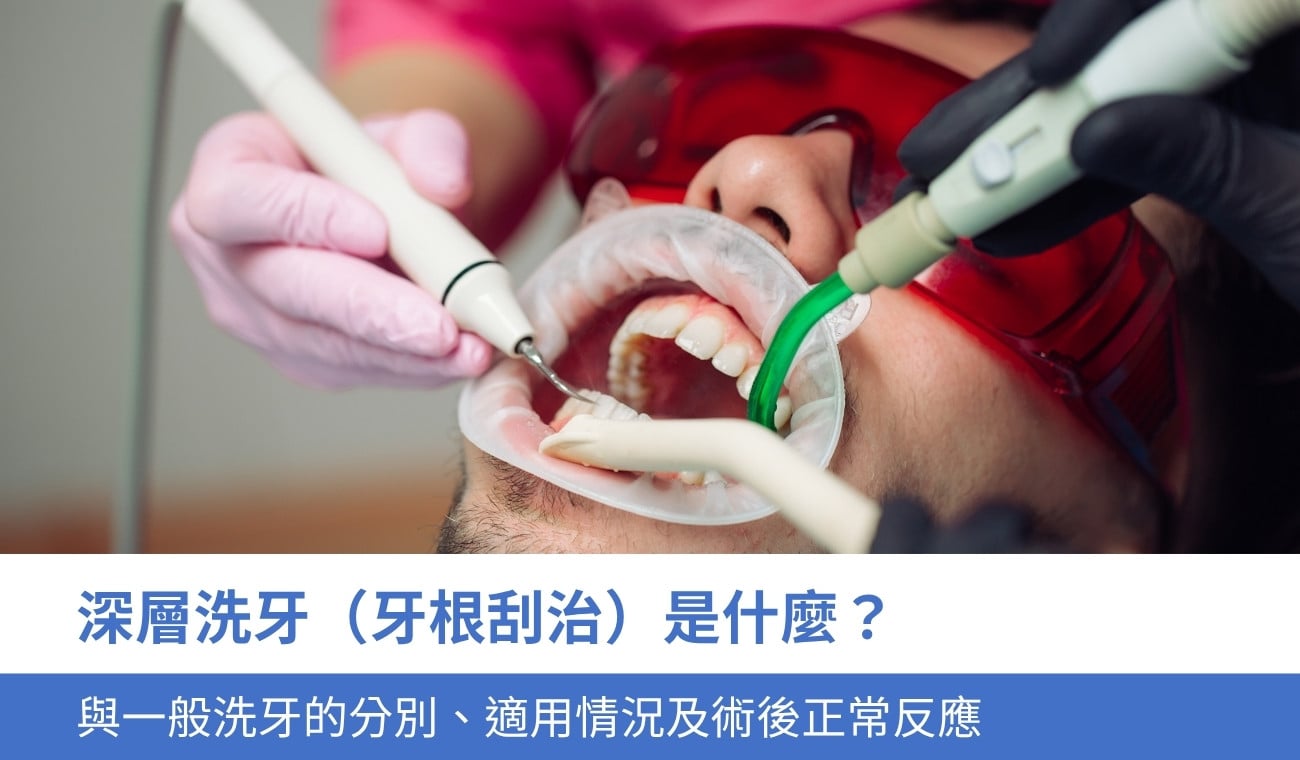
When a dentist recommends deep cleaning, it usually means the periodontal pockets have already deepened and tartar is attached to the root surface below the gum line, where routine scaling cannot reach it, so it has to be cleaned site by site under local anaesthesia.
Key points of this article
- The basis for the decision is pocket depth and tartar on the root surface
- Risk factors such as smoking are not a basis for deep cleaning
- Teeth feeling looser after treatment is mostly what is seen once the gums settle
- Sensitivity, oozing of blood and tenderness fade within a few days
- Follow-up visits are still needed after treatment for the periodontal pockets to stay stable
How does deep cleaning differ from routine scaling? Is scaling and root planing the same treatment?

Deep cleaning and scaling and root planing refer to the same treatment, which is also called root smoothing and is a non-surgical treatment for periodontal disease. During treatment, in addition to scraping off the tartar inside the pocket, the root surface is also smoothed to reduce places where bacteria can attach again. The differences from routine scaling are as follows:
| Comparison Items | Routine scaling | Deep Cleaning (Scaling and Root Planing) |
| Area treated | Tooth surfaces above the gum line | Root surfaces below the gum line, inside the periodontal pocket |
| Anaesthesia | Generally not needed | Local anaesthesia is usually needed |
Deep cleaning is charged according to the number of teeth treated. For the fee range and billing unit of each level of treatment in Hong Kong, see Periodontal treatment fees in Hong Kong.
When is deep cleaning needed? 3 signs the dentist looks for in a periodontal examination
Bleeding when brushing and bad breath occur in both gingivitis and periodontitis, so symptoms alone cannot tell whether deep cleaning is needed. The dentist measures the periodontal pockets site by site and combines this with X-rays, which is why it is common for only some teeth in a mouth to need deep cleaning.
Periodontal pocket depth of 4 mm or more
A periodontal pocket is the gap between the gum and the tooth root, about 1 to 3 mm when healthy. At 4 mm or more, tartar and plaque have built up at a depth that daily brushing cannot reach, and specialised tools are needed. For the difference in cleaning difficulty between 4 to 5 mm and 6 mm or more, see periodontal pocket in one article.
Alveolar bone loss visible on X-ray
When X-rays show a drop in alveolar bone height together with attachment loss, it means the inflammation has reached deep into the tissue that supports the teeth. Tartar on the root surface needs to be cleaned deeply, which routine scaling cannot reach.
Bleeding or pus on probing
When the dentist measures the pocket with a probe, a site that bleeds or has pus at the first touch indicates active inflammation still present in the pocket, and it will be prioritised for deep cleaning.
If the pockets have not deepened, X-rays show no bone loss and there is only redness, swelling and bleeding at the gum margin, it is mostly gingivitis, and routine scaling together with better cleaning is generally enough. For how it is managed, see gum inflammation. Smoking and poor cleaning habits are risk factors for periodontal disease, but are not in themselves a basis for deep cleaning.
The deep cleaning process: from periodontal examination and local anaesthesia to root surface cleaning
Deep cleaning generally proceeds in the following order, and the actual arrangements depend on the number of teeth that need treatment:
- Periodontal examination and X-rays: Based on pocket depth and bone loss, the teeth that need deep cleaning are identified.
- Local anaesthesia: Local anaesthetic is injected at the sites to be treated to reduce discomfort when cleaning below the gum line.
- Removing tartar from the root surface: Ultrasonic instruments and hand instruments are used to clean the root surface inside the pocket, site by site.
- Reassessment: After a period following the procedure, the pockets are measured again to confirm whether the inflammation is under control, and the subsequent treatment and maintenance arrangements are then decided.
Do teeth become loose after deep cleaning because they were damaged by the cleaning?
Deep cleaning does not make teeth loose. Before treatment, inflamed gums are swollen and temporarily hold the teeth tightly; after deep cleaning removes the tartar from the root surface, the gums gradually settle, and because periodontal disease has long since caused loss of the alveolar bone that supports the teeth, the teeth then appear loose after treatment.
The degree of looseness felt after treatment reflects the support actually remaining in the alveolar bone, and the dentist will check it at the reassessment. When teeth are noticeably loose, whether they can be kept depends on several factors such as the remaining bone and the degree of mobility; for how this is assessed, see severe periodontal disease .
After-effects of deep cleaning: 3 normal reactions and when a follow-up is needed

Two things tell you whether a reaction after deep cleaning is normal: whether the discomfort lessens day by day, and whether it is confined to the treated teeth and gums. Discomfort that keeps getting worse, or spreads to the face or the whole body, is not a normal post-treatment reaction.
| Reaction after treatment | Normal presentation | Presentation that needs a follow-up examination |
| Tooth Sensitivity | Brief soreness on contact with hot or cold, gradually lessening within a few days | Severe pain that persists and does not lessen |
| Gum bleeding | Slight oozing of blood when brushing or eating | Heavy bleeding or bleeding that does not stop |
| Gum tenderness | Slight tenderness in the gums after the anaesthetic wears off | Swelling that spreads to the face, or comes with fever |
Teeth become sensitive because root surfaces that were covered by tartar are exposed after cleaning, so they react more strongly to hot and cold stimuli. While sensitive, you can use desensitising toothpaste, temporarily avoid foods that are too cold or too hot, and brush the treated areas gently with a soft-bristled toothbrush.
After deep cleaning, it is generally recommended to wait at least 1 hour before eating and to choose mild foods first. For when you can eat and which drinks to have or avoid after different types of scaling, see How long after scaling and polishing can you eat.
Aftercare for deep cleaning
Deep cleaning removes the tartar that had built up at the time of treatment, but plaque will still re-form every day afterwards. Periodontal disease is a chronic condition that needs long-term control, and whether the pockets stay at the depth reached after treatment depends on regular follow-up visits and daily cleaning.
The focus of home cleaning is the treated gaps between teeth and the gum margin. You can choose interdental brushes of a suitable size as your dentist recommends and use them together with dental floss daily. The follow-up interval is decided by the dentist according to pocket depth and how well the inflammation is controlled.
FAQ
How many visits does deep cleaning take? How long does the whole course take?
The number of deep cleaning visits depends on the number of teeth to be treated and the pocket depth. When the area is large, it is often done in stages by different areas of the mouth. From the start of treatment to periodontal stability, the time needed ranges from a few weeks to more than six months, depending mainly on the severity of the periodontal disease. For how long mild and moderate-to-severe cases each take and when the maintenance phase begins, see How long does periodontal treatment take to work.
Summary
Deep cleaning (scaling and root planing) deals with root surfaces that routine scaling cannot clean, and whether it is needed and which teeth need it is decided by the periodontal examination and X-ray results. Brief discomfort after treatment is a common reaction, while whether the periodontium stays stable depends on follow-up visits and cleaning between the teeth afterwards. For the staging of periodontal disease and the various treatment methods, see Complete guide to periodontal disease.
Article last updated: 2026-10
Disclaimer
This article is for information only and does not contain any invitation or solicitation. Patients should seek a professional dentist for diagnosis and treatment according to their own circumstances. To find out more or book a service, we recommend contacting the relevant clinic directly. Please choose suitable dental services and clinics carefully yourself.



