
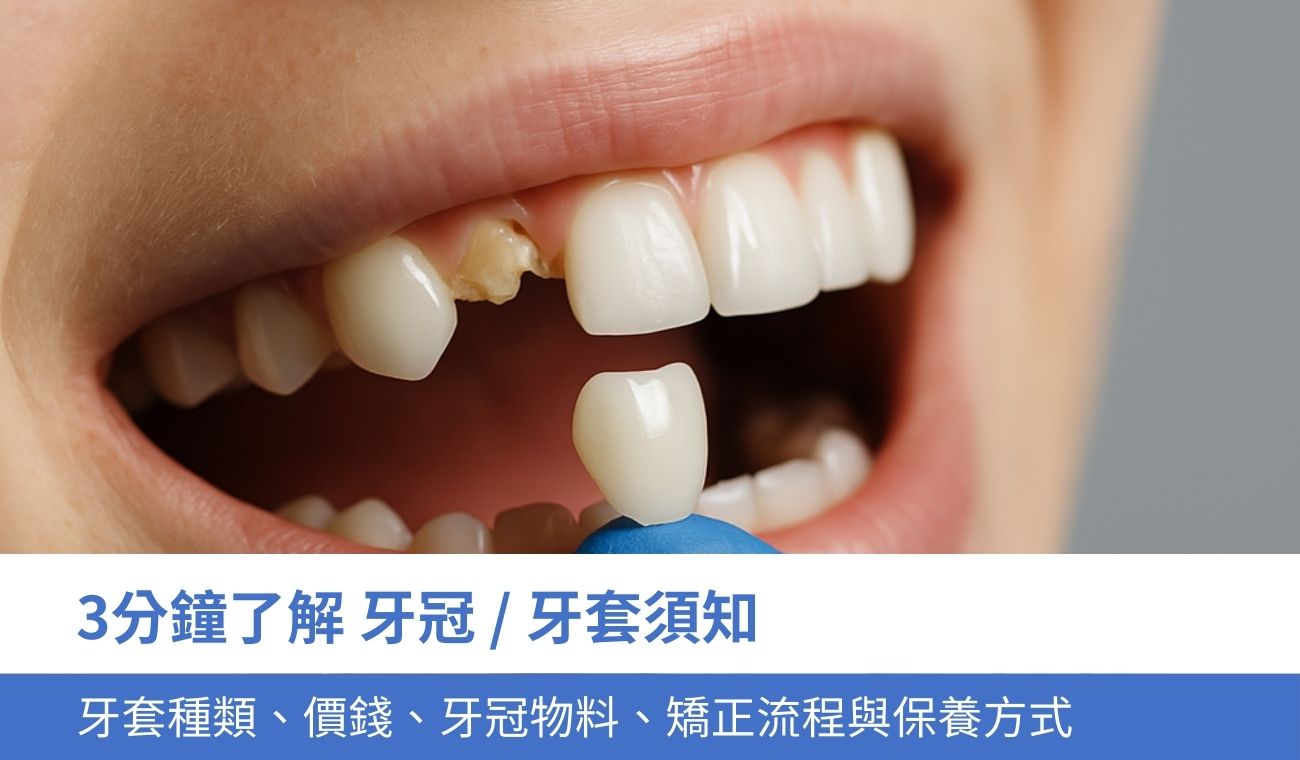
Braces are a common method of correcting tooth alignment and bite problems, and are divided into different types such as metal and ceramic according to material.
What is a dental cap? Is it the same as a crown?
braces/crown
A dental cap, also called a crown, is a prosthetic device used to cover a single tooth, strengthen its structure, and protect it or restore its appearance. It is a type of fixed denture. Common materials include metal, all-ceramic and porcelain-fused-to-metal.
When do you need a dental cap?
If you have any of the following situations, the dentist may recommend a cap (crown) to protect the tooth or restore its function:
- The tooth is severely decayed
- Root canal treatment has been completed
- The tooth is cracked or fractured
- As a support point for a bridge
- You want to improve the appearance of your teeth
A dental cap is like a protective cover for the tooth. When a tooth is damaged, its structure has weakened, or its appearance needs improving, a crown may be needed.
braces vs removable dentures
Although caps and removable dentures are both prosthetic devices fitted to the teeth, their purposes and the people they suit are completely different:
A cap is a fixed restoration that covers a single tooth, mainly to protect weakened tooth structure, restore chewing function or improve appearance; a removable denture replaces teeth that have already been lost, is made up of several false teeth, is held in place by a denture base or metal clasps, and can be taken out by the wearer.
Simply put, if the tooth is still there but its structure is unstable or needs strengthening, you need a cap; if the tooth has been extracted and the gap needs filling, you need a removable denture.
bracesIs it different from clear aligners?
The clear aligners we usually hear about, are they the same thing?
A crown (cap) is used to repair a tooth and is a type of fixed denture, while clear aligners are transparent braces used to adjust tooth alignment, so the two have completely different functions!
| Item | Crown | Clear aligners (transparent aligners) |
| Position | Covers specific teeth | The whole row of teeth |
| Natural appearance | Depends on the material | High |
| Purpose | Strengthening, preventing fracture and aesthetic restoration | Improving crooked teeth, protruding teeth and bite abnormalities |
| When It Applies | Large fillings, after root canal treatment, cracked or damaged teeth | Crowded teeth, large gaps between teeth, misaligned bite |
| Removable or not | No | Yes |
Types of dental capsWhat are the options? 3 common cap materials
Dental caps can be divided into the following three main types according to the material they are made from:
Full Ceramic Crown
An all-porcelain cap is made entirely of porcelain and looks closest to a real tooth. It suits people with high aesthetic requirements, such as office workers, models or people who often show their teeth when speaking. It contains no metal, so it does not cause metal allergy, and its colour is stable and not prone to discolouration.
The price is relatively high, but if appearance is your main concern, it is a very worthwhile option to consider.
Metal
A metal cap is one type of artificial crown, usually made of stainless steel or alloy, with a metallic sheen on the surface. As metal is harder, it may cause a certain amount of wear to the opposing teeth during use.
Metal caps are usually relatively low in price and have a certain strength and stability, and can be used for teeth that need to withstand greater biting force. Metal materials also include types such as gold alloy, and the price differs depending on gold content, material composition and method of making.
porcelain-fused-to-metal
A porcelain-fused-to-metal crown is a composite cap that uses metal as the inner structure with a layer of porcelain fired onto the outside. It combines the strength of metal with the natural appearance of porcelain, striking a balance between appearance and durability.
Although it looks more natural than a pure metal cap, compared with an all-ceramic crown it still looks slightly flat and opaque and is not as lifelike as all-ceramic. There is also a risk of porcelain cracking or chipping because of differences in thermal expansion and contraction.
Comparison of 3 types of dental cap materials
| material | full ceramic crown | Metal braces | Porcelain-fused-to-metal cap |
| Price | Higher price | Lower price | Lower price |
| Colour | Natural colour | Metallic colour | Slightly flat and opaque-looking |
| Natural appearance | High | Low | Medium |
| Porcelain chipping | Less likely | No | More likely |
It is advisable to have a dentist assess you before choosing, and to choose a suitable material according to the condition of your teeth and how they are actually used.
Dental cap pricesRoughly how much? Is it expensive?
Below is a reference price range by material. The actual price still depends on the individual's oral condition and the clinic:
- Metal cap price: HK$2,000 – HK$3,500
- Porcelain-fused-to-metal cap price: HK$3,500 – HK$6,000
- All-ceramic crown price: HK$5,500 – HK$9,000
- Full zirconia crown price: HK$6,000 – HK$10,000
Besides the difference in material, the skill used to make and fit the cap also matters a great deal in price differences, so be sure to choose a registered dentist whose skill you can trust.
If the cap does not fit the real tooth well enough, it may lead to a poor bite and places that are hard to clean, which raises the risk of tooth decay or periodontal problems.
Does getting a cap hurt? The 5 steps of making a crown
Making a crown does not usually cause obvious pain, as most of the procedures, such as grinding the tooth, taking impressions and bonding the crown, are carried out under local anaesthesia. In a few cases, such as a tooth that is already very sensitive or a root that has not yet stabilised, there may be brief discomfort, but it does not affect daily life.
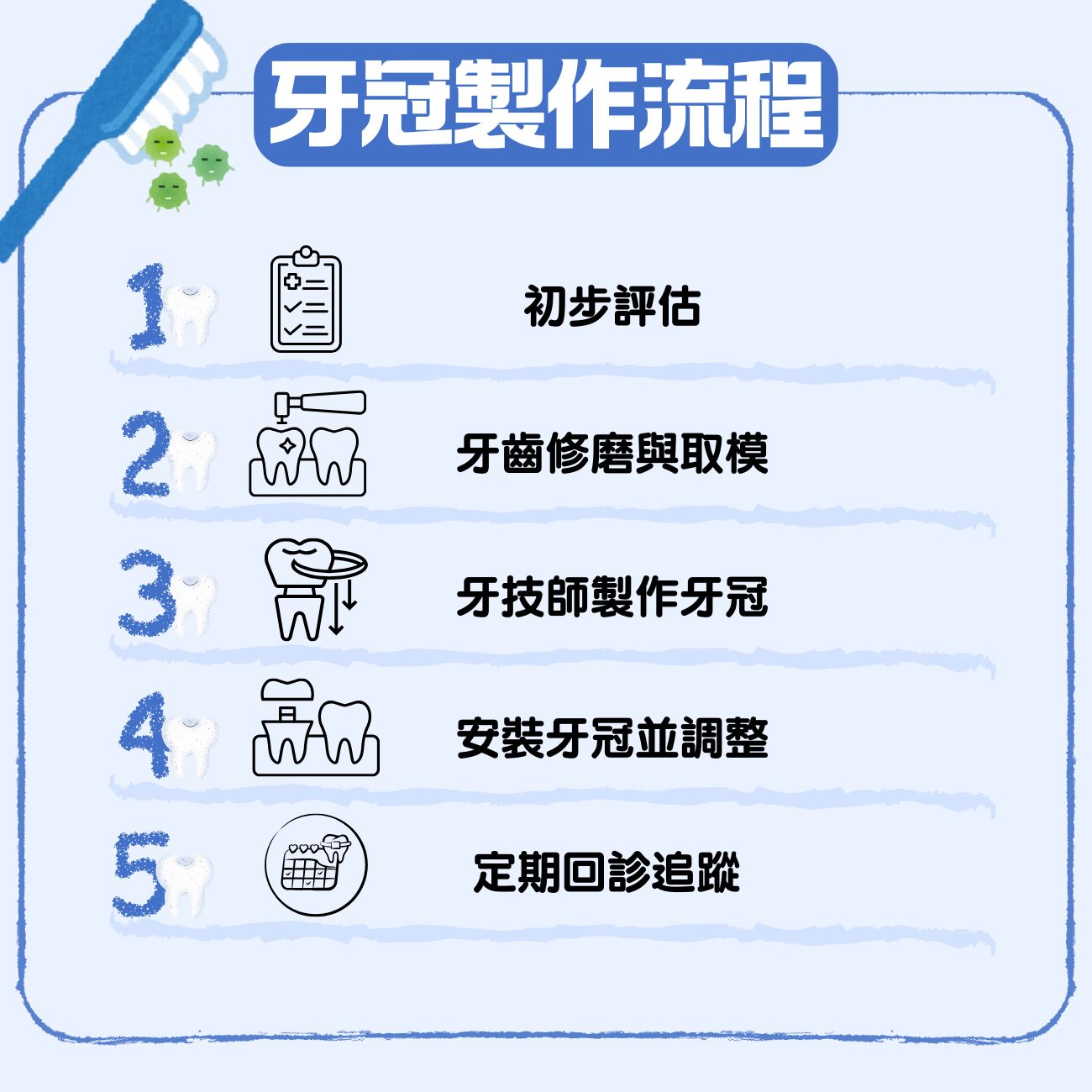
Initial assessment
Before making the crown, the dentist will first carry out a full oral examination to see whether the condition of your teeth is suitable for a crown. This includes taking X-rays and checking for problems such as tooth decay and cracks.
This step is the key to deciding the later treatment, and a thorough assessment can also avoid problems such as the crown coming off, pain or discomfort later on.
Tooth preparation and impressions
After confirming that the condition of the tooth is suitable for a crown, the dentist will begin the preparation. Once the tooth has been prepared, the dentist will take an impression for you, usually with impression material or a digital scanner, as the basis for making the crown.
Some clinics will fit a temporary cap for you to protect the prepared tooth and avoid sensitivity or discomfort.
The dental technician makes the crown
The dental technician makes the crown according to colour matching, model data and the bite relationship, which generally takes about 5 to 10 working days, depending on the individual clinic's process and the material.
Fitting the crown and adjustment
Once the crown is ready, the dentist will arrange a follow-up visit to fit the cap. The dentist will then check whether the crown fits snugly, whether the colour looks natural and whether the contact with the neighbouring teeth is smooth, and will adjust the bite height so that the teeth do not feel uneven when biting together.
If everything is confirmed to be in order, the crown is bonded firmly onto the tooth with adhesive.
regular follow-up monitoring
After the crown is fitted, it does not need regular adjustment like braces, but it is still advisable to return for one check within a few weeks of fitting, to confirm that the fit between the crown, the tooth and the gum is stable.
How do I care for a cap after getting one? 3 things to know!
Once the crown is fitted, daily care is very important if you want it to last long and stay stable! Neglecting daily care easily leads totooth decay, periodontal disease and other oral problems.
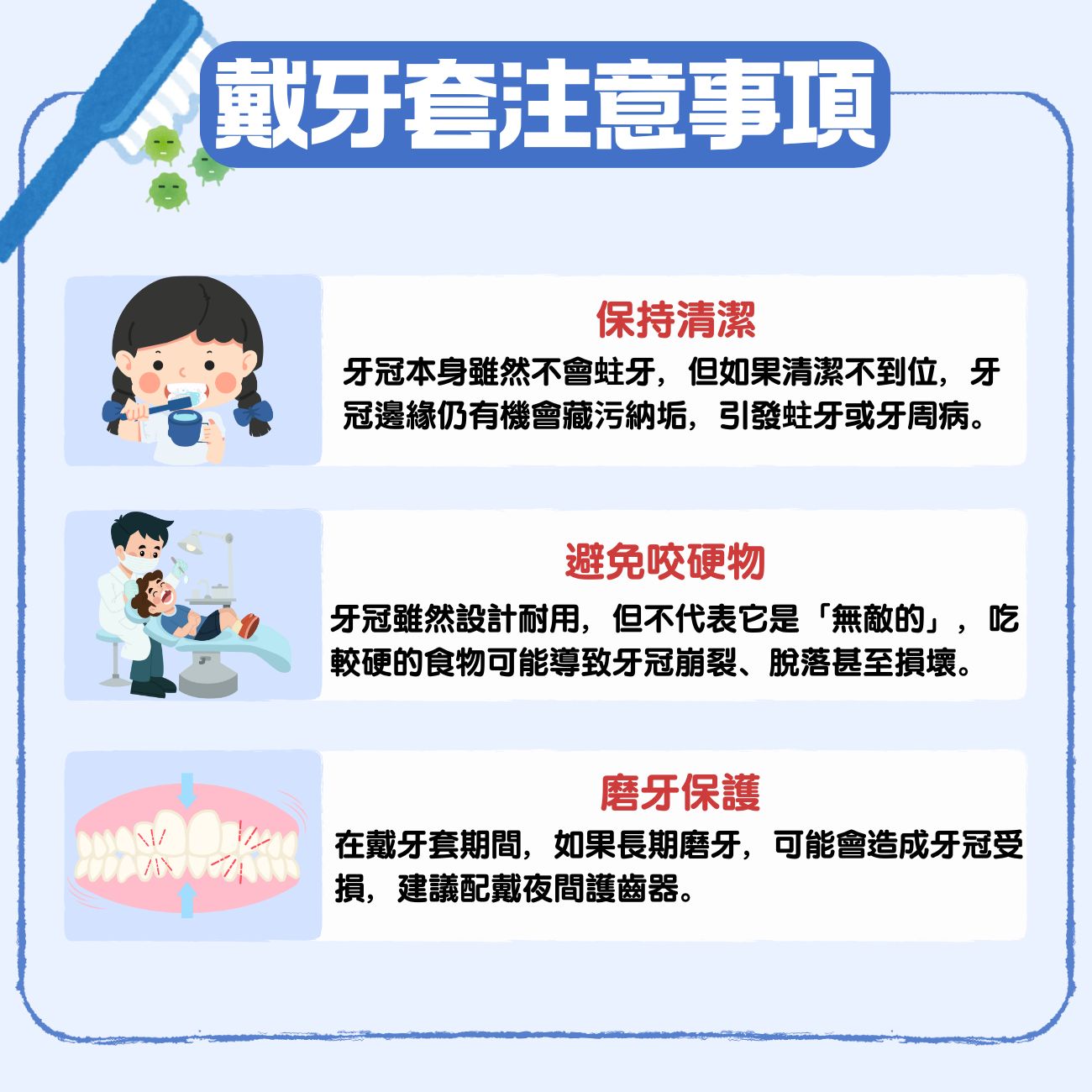
Keep it clean
Food debris can easily get caught in the gaps and hard-to-reach corners between teeth. It is recommended to brush correctly every day and use interdental brushes or floss, taking special care to clean the crown margin and the junction with the neighbouring teeth.
The crown itself cannot decay, but if cleaning is not thorough, dirt can still collect at the crown margin and cause tooth decay or periodontal disease.
Avoid biting hard objects
Crowns are designed to be durable, but that does not mean they are "invincible"! Often biting ice cubes or eating hard sweets can make the crown crack, come off or even break.
All-ceramic crowns and porcelain-fused-to-metal crowns in particular may chip under strong biting force, so you should avoid using the crown to bite or chew hard objects.
Protection against grinding
Some people do not normally notice that theyteeth grinding, but if the grinding continues over a long period while wearing a cap, it may damage the crown. If the dentist diagnoses a grinding problem, they may also recommend wearing a "night guard" to protect the cap from wear.
Summary
Dental caps are commonly used to protect damaged teeth, restore bite function or improve the appearance of the teeth. Different cap materials differ in appearance, strength, price and suitability, and it is advisable to have a dentist assess you according to the condition of your teeth and your treatment needs.
Disclaimer
This article is for information only and does not contain any invitation or solicitation. Patients should seek a professional dentist for diagnosis and treatment according to their own circumstances. To find out more or book a service, we recommend contacting the relevant clinic directly. Please choose suitable dental services and clinics carefully yourself.



