Opens in a new tab
Dental Crowns

Dental Crowns

Protect damaged teeth and restore their appearance and bite

A dentist uses a shade guide to choose the crown colour for a patient

What dental crowns are for

A crown is an artificial tooth cap. It fits over the whole tooth like a helmet to protect a tooth that is decayed, chipped or weakened after root canal treatment, and restores its appearance and bite.

Protect damaged teeth
Restore your bite
Elderly Health Care Voucher Accepted

When you may need a crown

If any of the following apply, you can book a consultation about crowns

After root canal treatmentThe tooth becomes brittle and needs a crown for protection
Large cavityToo little tooth is left for a filling to withstand biting force
Chipped or cracked toothCovers the whole tooth to reduce further cracking
Severely worn teethRestores tooth height and bite
Old crown is loose or damagedNeeds checking and replacing

Crown key facts

MaterialsFull ceramic crown: no metal colour difference, natural look
ProcedureUsually two visits: first the tooth is reshaped and an impression is taken, then the crown is fitted
While the crown is being madeA temporary crown protects the reshaped tooth
Elderly Health Care Voucher Accepted

Crown materials compared

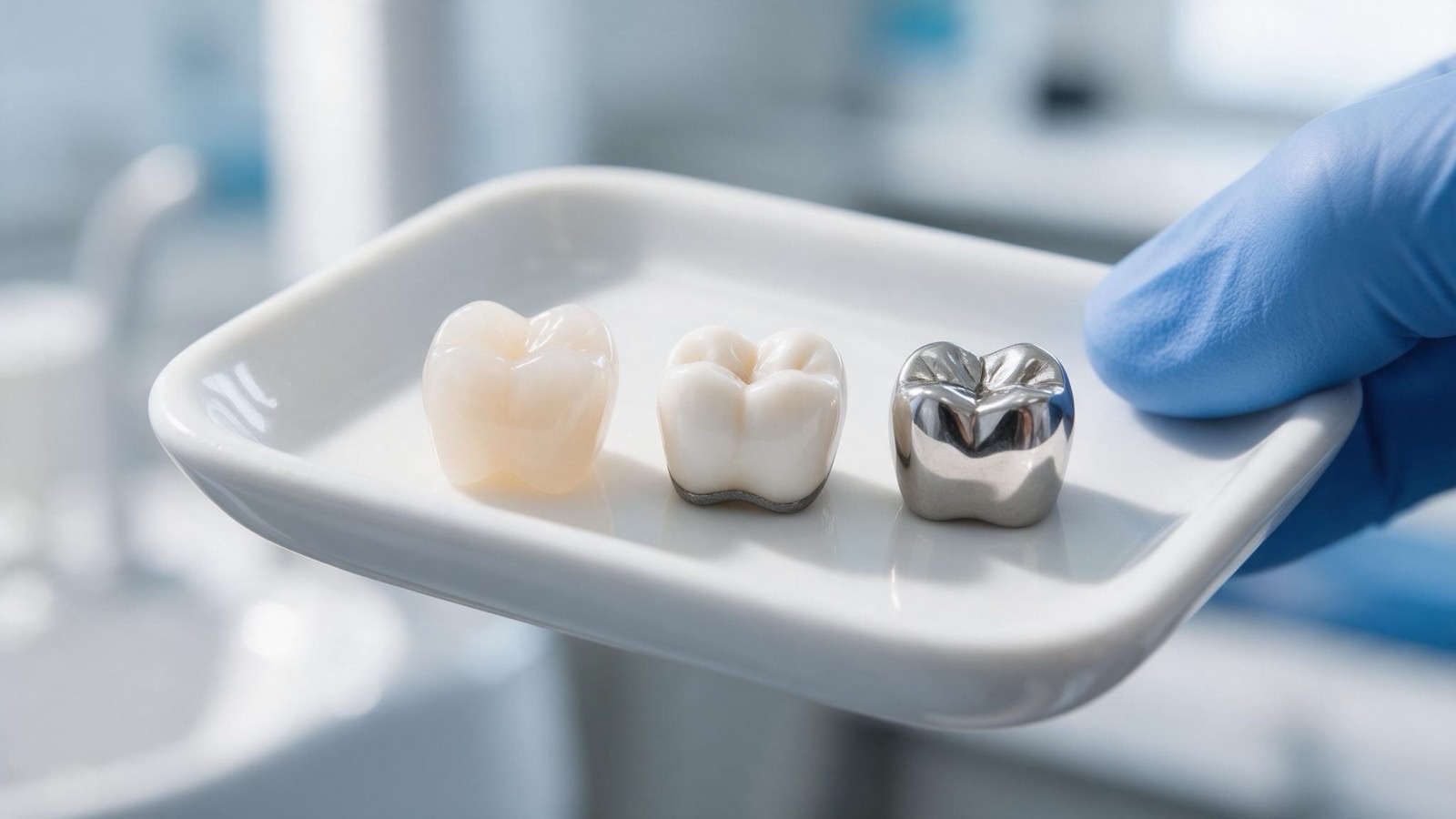
Full ceramic, porcelain-fused-to-metal and metal crowns compared side by side

From left: full ceramic crown, porcelain-fused-to-metal crown (metal edge visible at the base), metal crown

All-ceramic crown

Contains no metal. The colour and translucency are close to a natural tooth. Suitable for front and back teeth, and no grey metal line shows at the gum edge.

Porcelain-fused-to-metal crown

Metal inside and porcelain outside, balancing strength and appearance. The crown is thicker, so more of the tooth has to be removed, and over time a grey metal line may show at the gum edge.

Metal crowns

The most hard-wearing and needs the least tooth to be removed, but the colour is obvious, so it is usually used only on back teeth.

Your dentist will recommend a suitable material based on the tooth's position, your biting force and your needs.

Differences between fillings, inlays and crowns

  • Small to medium cavity: a filling, done in one visit
  • Larger cavity, but the tooth walls are still intact: a ceramic inlay can be used
  • Large part of the tooth chipped, or brittle after root canal treatment: a crown covers the whole tooth

See Dental Fillings.

The crown process in 6 steps

  1. 01

    Examination and assessment

    We examine your teeth and take X-rays to check that the roots and gums are healthy

  2. 02

    Reducing the tooth

    After local anaesthesia, the tooth is reshaped to leave space for the crown

  3. 03

    Impression or scan

    An impression or intraoral scan is taken and the crown shade is chosen

  4. 04

    Temporary crown

    A temporary crown is fitted to protect the reshaped tooth

  5. 05

    Trial fitting and adjustment

    Once the crown is made, it is tried on and its shape and bite are adjusted

  6. 06

    Cementing

    Once the fit is confirmed, the crown is cemented in place and regular check-ups are arranged

Aftercare for crowns

Cleaning between the back teeth with an interdental brush

Clean the join between the crown and your natural tooth every day, using floss or an interdental brush

  • A temporary crown comes loose more easily, so avoid sticky and hard foods. If it comes off, keep it safe and contact the clinic
  • Right after a crown is cemented, you may have brief sensitivity to hot and cold for a few days
  • If the crown feels “too high” when you bite, please come back so we can adjust your bite
  • The crown itself cannot decay, but the join with your natural tooth still can. Brush every day and floss along the edge
  • If you grind your teeth at night, the dentist may suggest wearing a night guard to protect them

Crown FAQ

Are the crowns here the same as the ones used in braces?

No. The crown on this page is an artificial tooth cap that covers a damaged tooth. The kind used in braces is for moving teeth. See Orthodontics.

Does the tooth need to be reshaped for a crown?

Yes. Under local anaesthesia, the dentist reshapes the tooth surface to leave room for the thickness of the crown. The amount removed depends on the material.

Does getting a crown hurt?

Local anaesthesia is used during reshaping, so the procedure is generally painless. You may feel mild soreness once the anaesthesia wears off, which usually improves within a few days.

Do I always need a crown after root canal treatment?

A tooth is more brittle after root canal treatment, especially a back tooth. A crown is generally recommended to reduce the chance of cracking, but the dentist decides based on how much tooth structure is left.

How long does a crown last?

There is no fixed number of years. It depends on your cleaning habits, biting force and the material. With good care and regular check-ups, a crown generally lasts many years.

What should I do if a crown comes loose or cracks?

Keep the crown that came off, avoid chewing on that side, and contact the clinic as soon as possible. Do not glue it back yourself.

Can I still get cavities after having a crown?

The crown itself cannot decay, but the join between the crown and your natural tooth can still decay. Brush and floss every day, and have regular check-ups.


Find Us

5 間分店都可預約牙套

Click a clinic on the map to see its address and how to book.

Map of TruCare Dental's 5 clinics (open in Google Maps)
Map data © OpenStreetMap contributors