
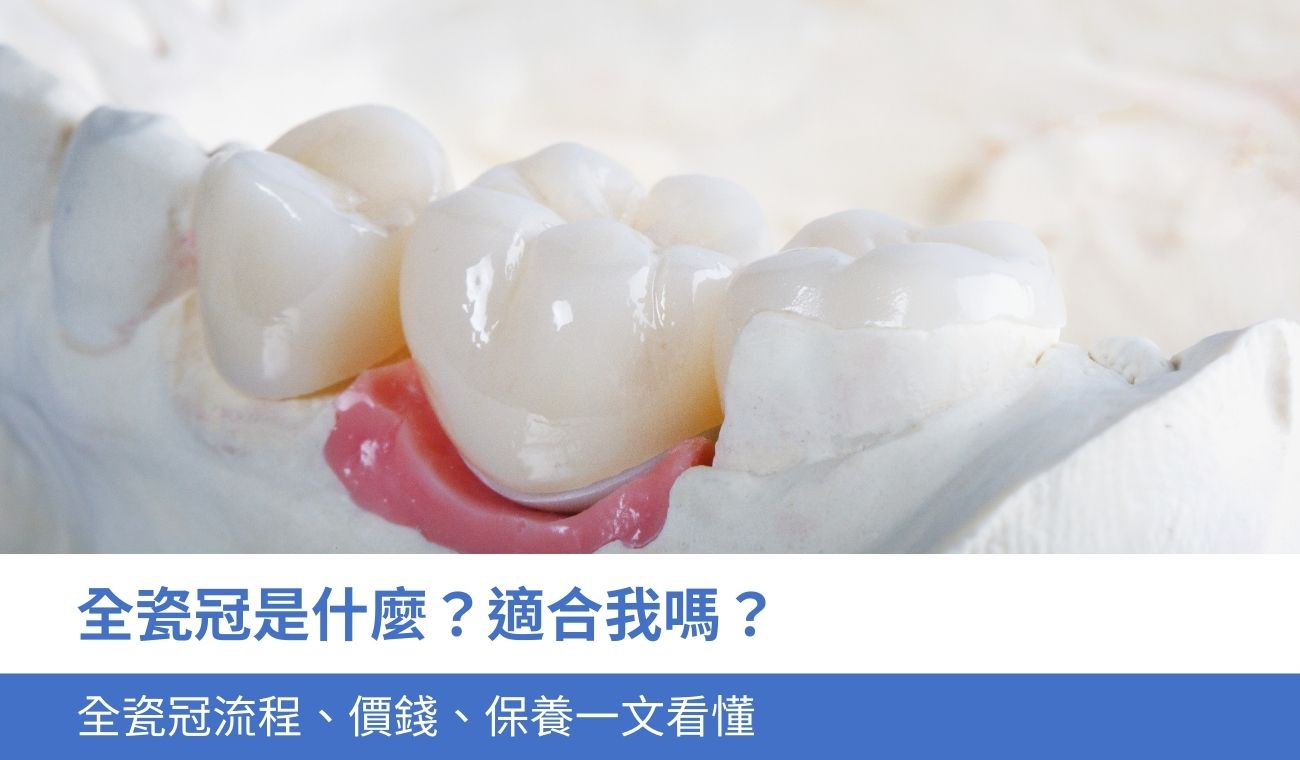
An all-ceramic crown is a natural-looking, high-strength, metal-free crown used to restore severe tooth decay, cracks or weakened teeth after root canal treatment, and treatment can be completed in about two to three visits.
Key Points
- All-ceramic crowns look natural and suit people who care about appearance
- Commonly used for severe tooth decay, cracks or weakened teeth after root canal treatment
- Prices are mostly between HK$5,000 and HK$10,000
- Good cleaning and avoiding hard objects can extend their life
- A loose or cracked crown needs prompt follow-up treatment
Full Ceramic CrownWhat is it? Is it right for me?
An all-ceramic crown looks like a real tooth, with natural and fine translucency and colour, so it is often used on front teeth or areas where appearance matters.
A denture material made entirely of ceramic
An all-ceramic crown is made entirely of ceramic with no metal content. Its colour and translucency are close to natural enamel, and it is a material that combines strength, aesthetics and biocompatibility, so that your smile does not look "artificial".
Depending on the need, the material can also be zirconia (full zirconia crown) for greater strength, or lithium disilicate (glass ceramic) for finer translucency.
Common situations where it is suitable
An all-ceramic crown is suitable when a tooth is damaged so much that it needs to be "fully covered", for example extensive decay, a deep crack or tooth structure loss, or when you want to improve the colour and shape of the tooth, or when the tooth has become fragile after an implant or root canal treatment. These are all relatively suitable choices.
Comparison with other crown materials
Compared with traditional metal crowns, the biggest advantage of all-ceramic crowns is that they look beautiful and natural, with no concern about metal allergy or discolouration of the gums.
Porcelain-fused-to-metal crowns (commonly known as PFM), although lower in price and good in hardness, may over time show a grey-black metal line at the gum margin, and are not very suitable for front teeth. If appearance matters to you, an all-ceramic crown is generally the most natural choice; if you have a very strong bite and need to withstand a lot of force, a high-strength zirconia all-ceramic crown may be the first choice.
Full Ceramic Crown The 5-step procedure explained
The whole procedure takes about two to three visits, with slight variation depending on the condition of the tooth.
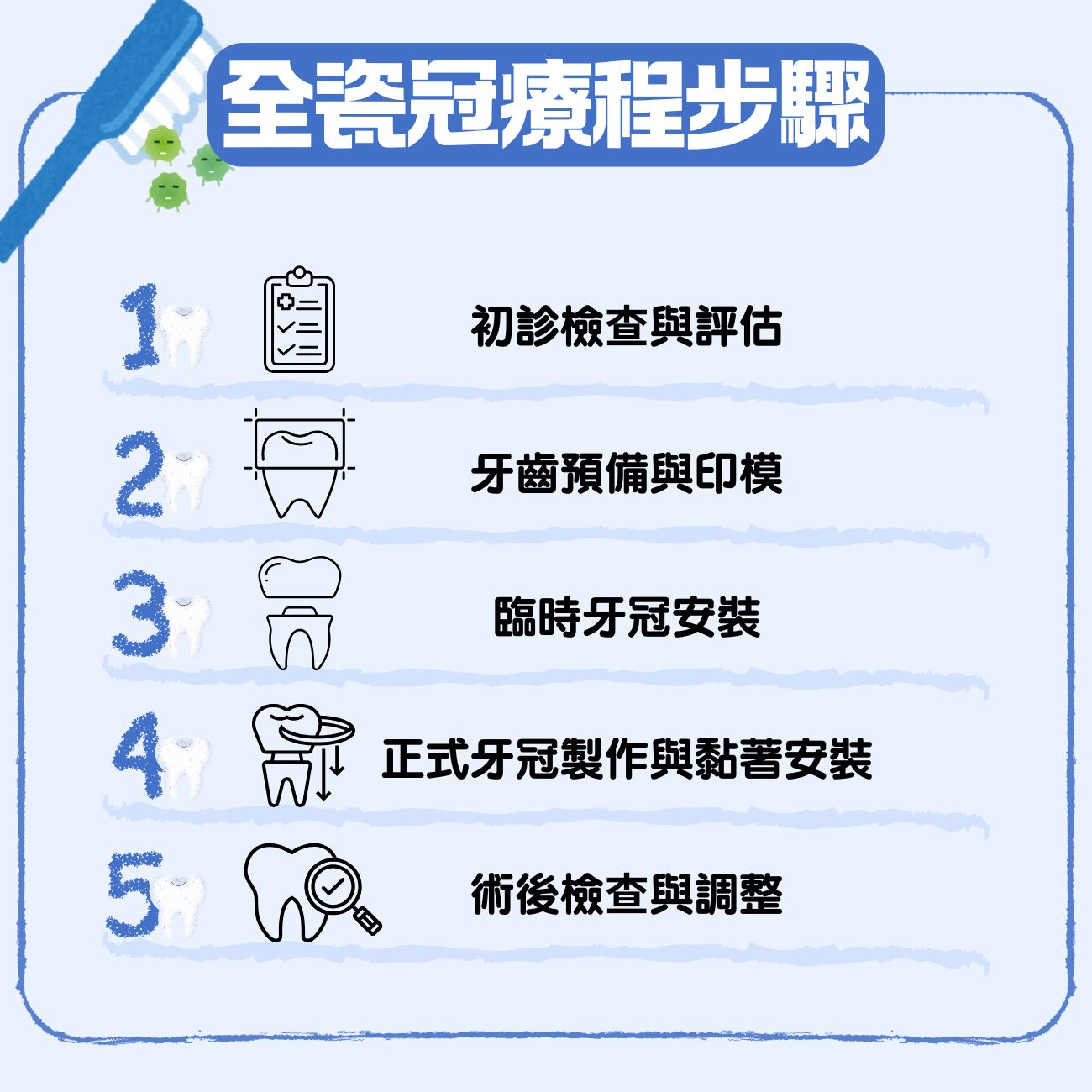
Initial Consultation and Assessment
The dentist will first carry out a full-mouth examination, including X-rays and checking the condition of the roots, to assess whether a crown is definitely needed, and will also discuss the colour, material, cost and overall treatment schedule.
Tooth preparation and impression
If it is confirmed that an all-ceramic crown is needed, the dentist will, after local anaesthesia, trim the tooth into a shape suitable for holding a crown, and then use a traditional impression or a digital intraoral scan to simulate the real shape of the mouth by computer, making sure the crown fitted later is snug and comfortable.
Fitting a temporary crown
While the final crown is being made, you will first wear a temporary crown to protect the prepared tooth from sensitivity and inflammation, so that you can keep your appearance for eating and social occasions.
Making the final crown and bonding it in place
The dental technician will custom-make your all-ceramic crown according to the impression and colour requirements. After it is finished, you will return for a trial fitting and bite adjustment to check that the colour, shape and fit are just right, and then the crown is bonded firmly in place.
Post-treatment check and adjustment
After the all-ceramic crown is bonded, a follow-up check is usually arranged after a period of time to confirm that the bite is comfortable, the gums are not inflamed and food does not get caught in use. Good follow-up helps the crown last longer and stay more stable.
All-ceramic crown prices in Hong Kong and factors affecting them
The price of all-ceramic crowns in Hong Kong covers a relatively wide range, as materials, clinic grade and equipment all differ.
Price range (single all-ceramic crown)
In Hong Kong a single all-ceramic crown generally costs about HK$5,000–HK$10,000, varying with the material and the complexity of the location. If root canal treatment needs to be done first, or a more precise zirconia material is used, the cost will also be higher.
Factors affecting price: material, clinic positioning and extra services
The higher the grade of the ceramic material, the higher the cost, and the technician's craftsmanship is also reflected in the price.
Whether digital intraoral scanning, X-rays and follow-up visits are used, and whether it is handled by a dentist specialising in aesthetics, will also affect the cost. For those who want natural and stable results, choosing an experienced clinic and dentist gives more peace of mind.
Tips for choosing a clinic and material
When choosing a clinic, you can first find out whether they provide before-and-after cases for reference, whether they explain the differences in materials in detail, and whether the treatment process is transparent.
If you have high requirements for appearance, it is advisable to discuss the colour and shape in advance, and to confirm whether the clinic and technician are skilled in aesthetic restoration.
How do I care for an all-ceramic crown and extend its life?
Whether an all-ceramic crown lasts a long time depends not only on the material and technique, but also on daily care.
Daily cleaning and habits
Attending a follow-up scaling every six months, and brushing and flossing every day, are the basics. The junction between the crown and the gum is where plaque collects most easily, so take special care there.
Avoid bad habits such as chewing hard objects, gnawing bones and opening bottle caps, which can all cause the crown to fracture. There is no need to restrict your diet too much, but avoiding hard objects greatly reduces the risk of damage.
Notes for special groups
If you grind your teeth at night, it is advisable to wear a night guard, which protects the crown from excessive wear.
If you have had several crowns, you also need regular follow-up to check that the bite is still stable. People whose gums inflame easily should maintain good cleaning even more, so that periodontal problems do not affect the life of the crown.
FAQ
What should I do if a crown becomes loose or cracked?
If a crown becomes loose or falls off, never stick it back on yourself, and return for treatment straight away. If there is a crack, depending on how deep it is, some can be repaired and some need a new crown.
How long can an all-ceramic crown last?
Under normal use, an all-ceramic crown can usually last 8–15 years or more. A good bite, cleaning and regular check-ups can all make the crown more durable.
How much does a porcelain veneer cost per tooth?
The cost of a veneer per tooth mostly falls around HK$4,000–HK$9,000, varying with the material, the technician's skill and aesthetic requirements. Veneers suit mild improvement of the shape of the tooth and are used differently from crowns.
What are the disadvantages of all-ceramic crowns?
The main one is the higher cost, and they also require more skill to make. If too little tooth structure is left, an implant or root canal treatment sometimes needs to be done first.
Do I need full porcelain crowns to whiten my teeth?
Not necessarily. If you only want whiter teeth, whitening or veneers are usually recommended first. Crowns are only needed for teeth that are more severely damaged.
Summary
Further reading:Types of dentures: how to choose between removable and fixed? Denture materials and price analysis at a glance!
Disclaimer
This article is for information only and does not contain any invitation or solicitation. Patients should seek a professional dentist for diagnosis and treatment according to their own circumstances. To find out more or book a service, we recommend contacting the relevant clinic directly. Please choose suitable dental services and clinics carefully yourself.



