
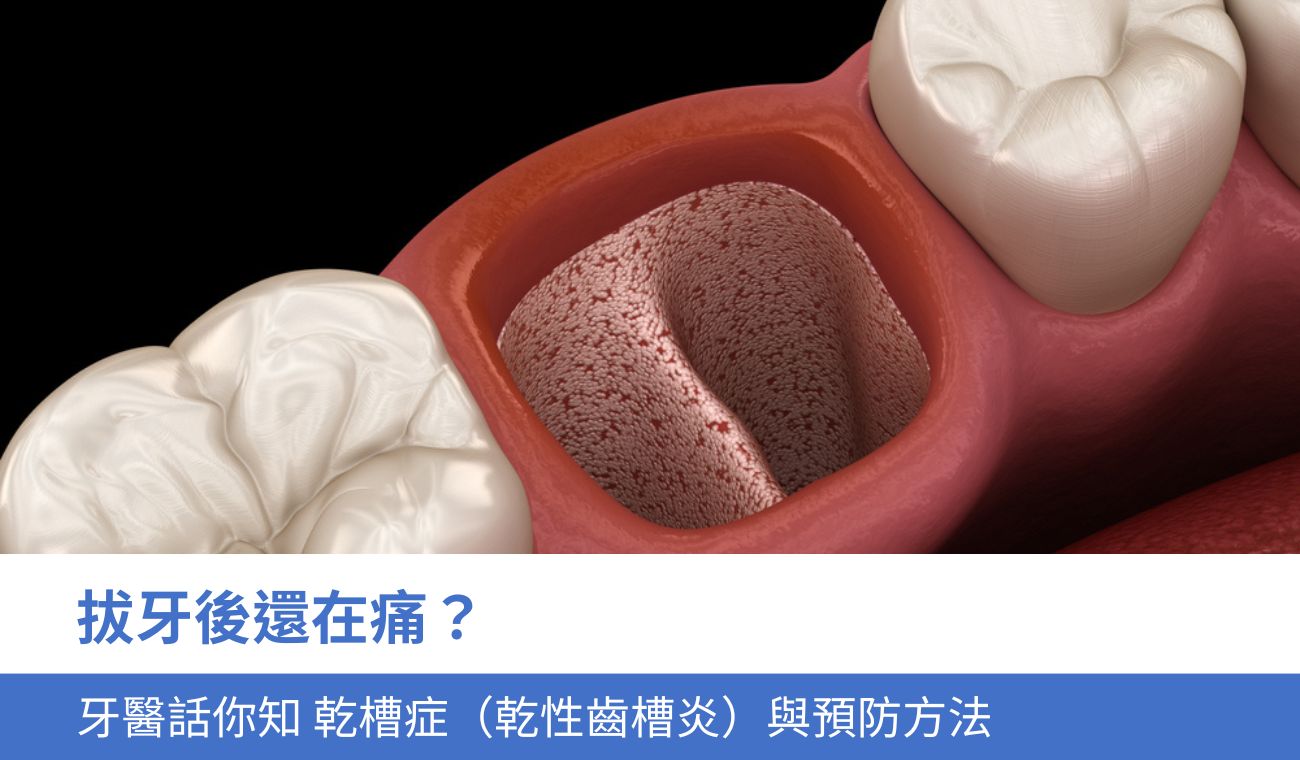
Dry socket is severe pain caused by the blood clot dislodging after a tooth extraction and the alveolar bone being exposed. Most cases improve within a week after the dentist treats it. The key is to tell it apart from normal post-operative pain, and to return for a follow-up if pain worsens unusually.
Key points of this article
- Days 2 to 4 after extraction are when dry socket is most likely to occur
- The key to telling them apart is the course of the pain: normal pain eases, while dry socket reverses and worsens
- An empty-looking socket with white bone showing is the typical identifying sign
- For 24 to 48 hours after surgery, avoid straws, hot food and vigorous rinsing
Pain after a tooth extraction mostly eases day by day, but in a few people it gets worse a few days later instead. The following explains the causes of dry socket, how to tell it from normal post-operative reactions and infection, how long recovery takes, and the key points of aftercare and prevention.
What is dry socket? Causes and how often it occurs
Dry socket (alveolar osteitis) is a complication in which the blood clot dislodges too early or fails to form after a tooth extraction, leaving the alveolar bone and nerve exposed. It occurs most often on days 2 to 4 after surgery and is more common after removal of lower wisdom teeth.
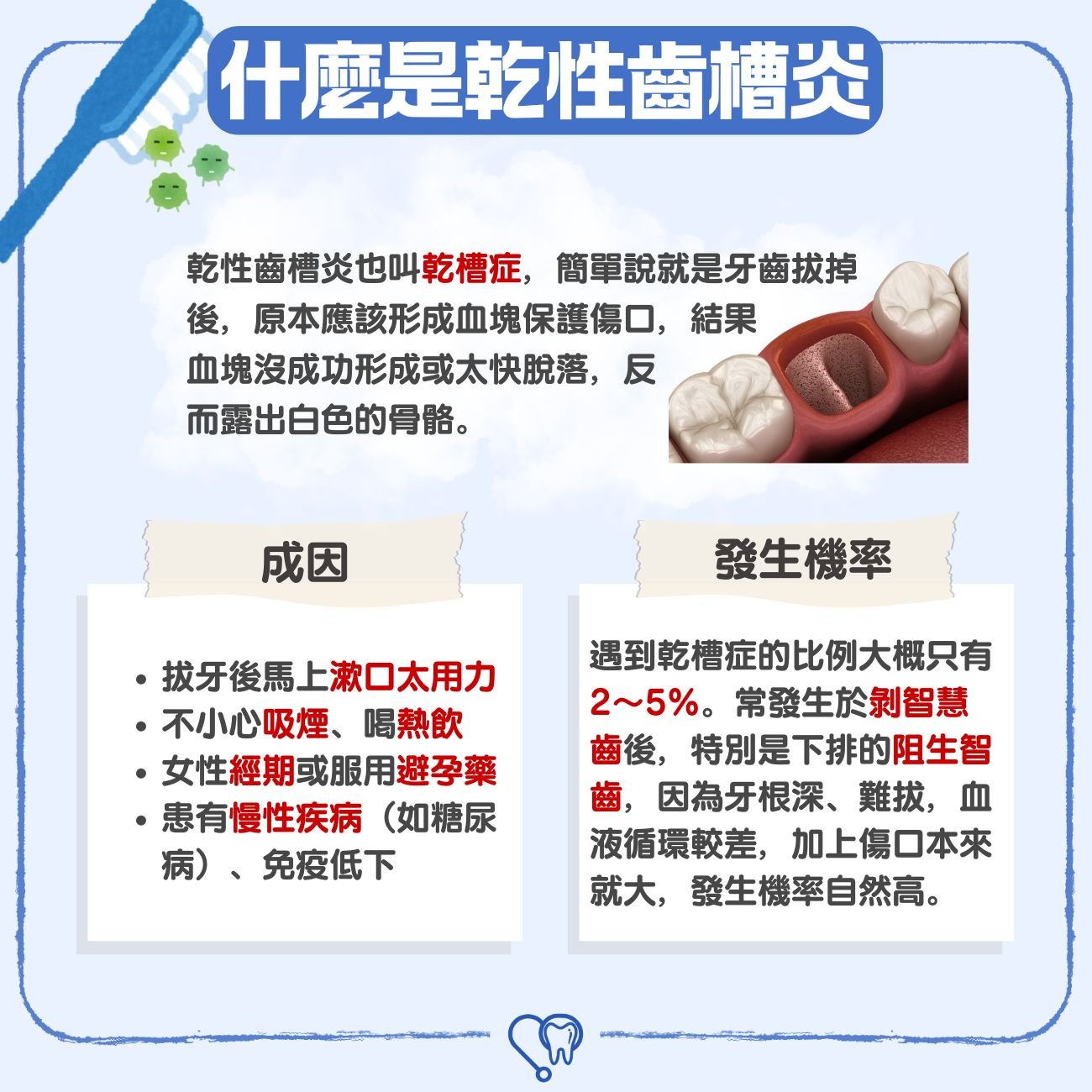
The cause is mainly that the blood clot is disturbed before it is firm. Besides rinsing vigorously too soon after surgery, smoking or drinking hot drinks, straws deserve particular attention: sucking creates negative pressure in the mouth and easily pulls a clot that has not yet firmed up away from the wound, which is often overlooked.
In terms of constitution, people with diabetes or lower immunity, or with hormonal changes (for example around menstruation or when taking oestrogen-containing contraceptive pills), have less favourable healing conditions and so a relatively higher chance of developing it.
Dry socket occurs in roughly 2% to 5% of cases, a relatively uncommon complication, and the actual risk depends on the condition of the individual's teeth and the difficulty of the extraction.
Why does dry socket often occur after wisdom tooth extraction?
In the lower jaw,Impacted Wisdom Teeth(wisdom teeth that grow in the wrong direction and are covered by gum or bone) have deeper roots, are harder to remove and leave a larger wound, and blood circulation conditions are relatively less favourable, so the chance of dry socket is higher than with ordinary extractions.Wisdom Tooth Extractionafter it, if the course of the pain seems wrong, you can judge it using the approach in the next section.
Is lasting pain after a tooth extraction a dry socket? How to tell normal post-operative reactions from abnormal situations
Normal post-operative pain eases day by day and improves with medication. If pain suddenly worsens on days 3 to 4 after surgery, and the blood clot in the wound disappears and white bone shows, it is mostly dry socket; if it comes with fever, pus and a bad smell, wound infection should be considered.
The key to telling them apart is the course of the pain, not whether there is pain. The hallmark of dry socket is that pain turns upward just when the blood clot should be firming up, and the pain sometimes spreads to the ear and jaw on the same side.
The most common trigger clinically is feeling better two or three days after surgery, then resuming hot food or switching to a straw too early, so that the clot that has not yet firmed up comes away from the wound. As for infection, the dividing line is whether there are signs affecting the whole body, and not only changes in the wound itself.
If after a tooth extraction you have persistent numbness of the lip or chin, or abnormal sensation, this is a different kind of post-operative sign that needs attention and is different from dry socket. For the detailed causes, see alsoAfter-effects of wisdom tooth extraction and nerve risks. You should likewise return for assessment and not try to work it out yourself.
How long does dry socket take to heal? Recovery period and treatment
Dry socket generally lasts 7 to 10 days, and after the dentist treats it, it usually starts to ease within 3 to 5 days. Surgery is usually not needed.
Treatment is not complicated: the dentist first removes food debris from the socket, then covers the exposed bone with a dressing, and if necessary combines this with anti-inflammatory or painkilling medication, with the aim of controlling pain and protecting the wound.
The care principles during recovery are the same as for prevention after surgery, and the key is to stop the wound from being irritated again. If there is still no improvement within the expected time, or pain keeps coming back, you need to return for a follow-up to check whether another problem is also present, rather than keep taking medication on your own.
How do you prevent dry socket? Key points of care in the 24 to 48 hours after extraction
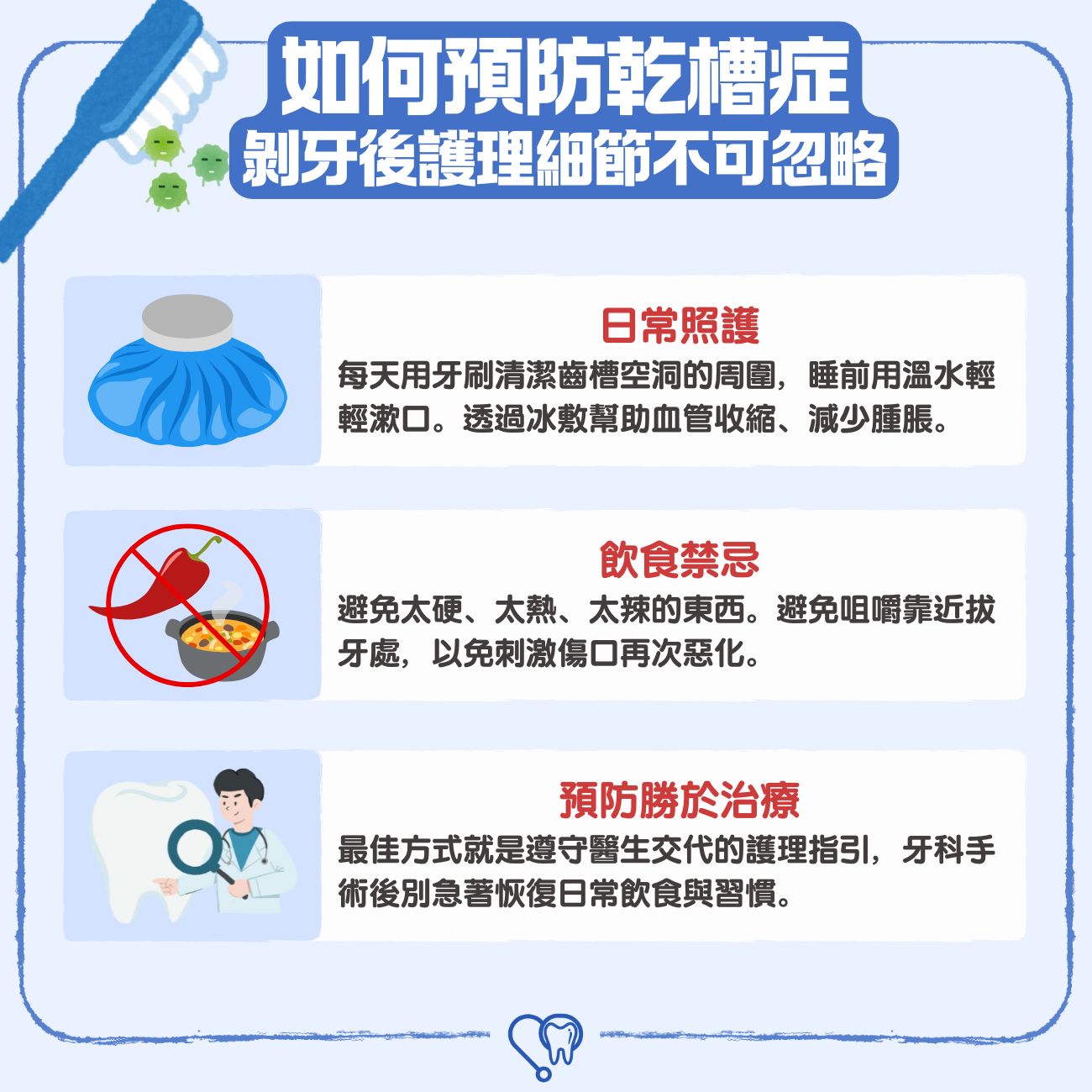
Prevention focuses on the 24 to 48 hours after surgery, when the blood clot is not yet firm, and whether care is done properly often decides whether healing goes smoothly afterwards. It is generally advised not to rinse for 30 minutes to several hours after extraction, and over the next few days to avoid straws, hot soup and smoking, to reduce the chance of the blood clot dislodging.
For cleaning, you can gently clean around the socket every day, avoiding the wound itself, and gently hold warm water or the mouthwash recommended by your dentist in your mouth before bed. If there is swelling, you can apply ice after surgery to help, about 10 minutes each time with about 20 minutes between.
For diet, stick mainly to warm or cool, soft food such as congee, steamed egg and tofu, avoid food that is too hard, too hot or too spicy, and try not to chew on the side of the wound. Following the dentist's instructions and not rushing to return to your usual diet and habits is the practical way to lower the risk of dry socket.
FAQ
Will dry socket get better on its own? Do I need to see a dentist?
The pain of dry socket mostly does not ease by itself, because the exposed bone keeps being irritated. The key is to have the dentist clean the wound and cover the bone with a dressing, rather than wait for it to get better by itself. If the pain gets worse instead of easing a few days after surgery, you should return for a follow-up and not just endure it with painkillers.
How long after a tooth extraction can you smoke without raising the risk of dry socket?
Nicotine constricts blood vessels and affects the stability of the blood clot and wound healing. Clinically, it is recommended to avoid smoking for at least 48 to 72 hours after extraction, and the longer the better. Smoking during the recovery period raises the chance of dry socket and delayed wound healing.
Is it a dry socket if the pain is still there a week after wisdom tooth extraction?
Not necessarily. Pain within the first 3 days after wisdom tooth extraction is normal and gradually lessens afterwards. If pain persists or even worsens after a full week, apart from dry socket, it may also be a wound infection or food debris trapped in the wound. Please return for a follow-up so the dentist can examine the wound, and do not try to work out the cause yourself.
Is dry socket more likely after an extraction during a woman's period or when taking contraceptive pills?
Hormones affect the stability of the blood clot, and the risk is slightly higher around menstruation or when taking oestrogen-containing contraceptive pills. If the timing can be arranged, you can discuss with your dentist avoiding extraction during your period, and take extra care over the first two days after surgery.
Summary
Dry socket is not something you will necessarily run into after a tooth extraction, but when it does occur, the pain is clearly worse than ordinary post-operative discomfort. If you remember only one thing, watch the course of the pain: normally it gets lighter and lighter, while in an abnormal case it gets heavier and heavier. When pain after an extraction gets worse a few days later, returning for the dentist to check the wound is safer than taking medication on your own.
Article last updated: 2026-09
Disclaimer
This article is for information only and does not contain any invitation or solicitation. Patients should seek a professional dentist for diagnosis and treatment according to their own circumstances. To find out more or book a service, we recommend contacting the relevant clinic directly. Please choose suitable dental services and clinics carefully yourself.



